Let’s Be Visually Literate!

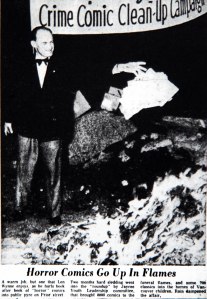
tumblr_lyq5t2z1Wg1qg2xvoo1_1280“Comics are the gateway drug to literacy.”   This remark by Art Spiegelman, Pulitzer Prize-winning author of the graphic memoir Maus, A Survivor’s Tale (1980-1991), is not as controversial nowadays as it would have been in the 1950s.  Back then, some communities banned and even burned comics, fearing they would seduce kids into criminal behavior.  Today, many teachers, librarians, and parents recognize how comics and other graphic literature draw kids into reading.  Some school districts, as in Maryland, have even made comics the the linchpin of their reading programs.  Yet the literacy promoted by these programs too often leaves kids visually illiterate—unable to make connections or draw conclusions about the pictures and design of graphic works.  This kind of half-knowledge can be as limiting and potentially dangerous as any other.  So, in today’s post, I will provide some recommendations, cautions, and comments about visual literacy—and its relationships to diversity issues, past and present. 
7086607The punning logo of one fine specialty publisher—“Toon into Reading”—refers both to its focus on graphic works and their recent use in the reading curriculum.  Established art designer and editor Francoise Mouly founded TOON Books in 2008 (together with her husband Art Spiegelman) because she wanted to offer American kids the rich comic book experiences she had growing up in France.  In the 1990s, Mouly had also seen how comics held their young son’s attention, keeping him from becoming a reluctant reader.  Toon Books, however, excels at even more than these admirable goals.  It helps kids develop visual as well as verbal literacy. 

Through end notes and online guides, it offers adults ways to help young readers examine and think about the images in TOON books.   This publisher’s website also engages young readers with online activities, read along videos, and texts in multiple_8830053 languages.  That its recommended reading lists, categorized into four distinct levels, range beyond its own publications further testifies to Toon Books’ knowledgeable sincerity.  Level One is designated for brand-new readers, Level Two for emergent readers, and Level Three for “advanced readers” ready to tackle chapter books.  Its newest category, labelled Toon Graphics, is aimed at ages 8 to adult, reading above 3rd grade level.  Although many teachers and librarians may appreciate these distinctions, I myself dislike such prescriptive labels, particularly if they are used in rigid or restricting ways.  I would rather make a dictionary available as youngsters select their reading on the basis of content or cover appeal.  Being stymied by a word or unable to puzzle it out by context then becomes a mystery to solve—another achievement!
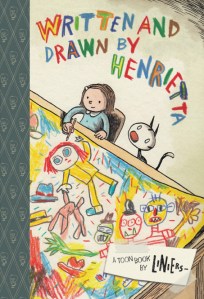
__3075142_origI recommend you peruse Toon Books’ entire catalog, but I also want to spotlight two of its recent publications.  Written and Drawn by Henrietta (2015) by Argentinian author/illustrator Liniers is a Level Three novel available in both English and Spanish editions.  Its colorful, charming rendering of a young girl’s first venture into cartooning is also insightful.  We see the fears, fascination, and whole-hearted fun typical of her age, identified as K-3 in the catalogue and further targeted by an accompanying Teacher’s Guide for Grades 2 and 3.  I love how Liniers in a two-page spread introduces an amazing variety of words and images for “hat”!  This plot-related spread is also a great, seemingly effortless teaching moment.   At the Toon website, readers can also watch short videos of Liniers (pen name of Ricardo Liniers Siri) interacting with fans while wearing one of his special hats.
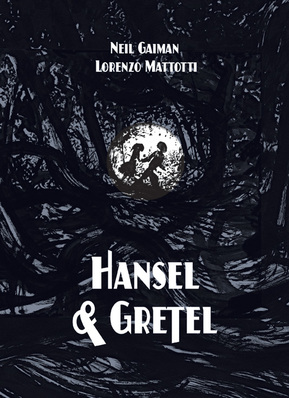
814000I was “wowed” by Hansel & Gretel (2014), authored by award-winning Neil Gaiman and illustrated by Lorenzo Mattotti.  Published as a Toon Graphics (ages 8 to adult), this work is accompanied by a teacher’s  guide demonstrating how this fairy tale may provoke discussion among tweens and teens as well as  adults.  Noteworthy here is how much deserved attention the guide’s authors pay to the arresting black and white images as well as Gaiman’s resonant language and narrative.  Four and a half pages are devoted to “Visual Expression,” along with the six and a half pages given to the tale’s written words. Perspective, angles, and multiple interpretations of silhouetted figures are among the visual elements aptly noted here.  I myself observed how Mattotti used silhouettes so well to portray ominous, predatory intent, with the witchlike character looming spiderlike at one point, while long or swirling white lines effectively convey flight or other kinds of motion.  At the Toon website, readers can also watch short videos of Gaiman dramatically reading aloud parts of the tale and discussing “comics and scaring children.”

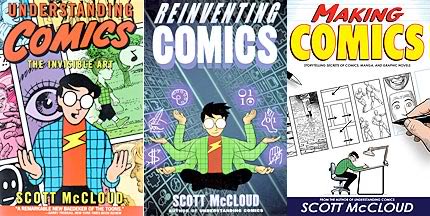
Of course, there are other tools out there to enable tweens on up to become visually literate or develop further visual sophistication. Now classic works on this topic include Scott McCloud’s Understanding Comics: The Invisible Art (1993), Reinventing Comics (2000), and Making Comics (2006).   (I briefly discussed the impact of these works here in March, 2015, along with McCloud’s own great graphic novel, The Sculptor [2015]).  Older teens and adults who enjoy theories and the history of ideas might also appreciate the multiple-award winning Unflattening (2015) by Nick Sousanis, excerpted and linked to reviews at his website

scottmccloud

One kind of tool I would caution about is aimed at readers who use tablets or mobile devices to view the growing number of comics and graphic novels available on line.  Some downloadable apps such as Amazon’s Comixology offer digital readers a “guided view” through the text—a so-called “cinematic experience” which removes the need for personally making connections between images, connecting images and words, or rereading a work.  Instead, one can follow along the path the company’s “skilled comics fan” has set for readers willing to follow it.  Little or no personal visual literacy or ongoing engagement is expected from individual readers. That is quite a different outlook than Francois Mouly’s goals for Toon Books.  In an interview, she has said, “With all our books, we do lesson plans of the ways to not just read the book, but reread the book. . . . [Our] ambition is . . .  to make something that can be reread.”
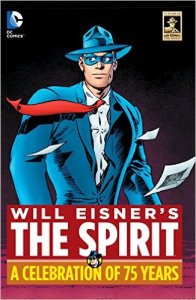
51eJOJChT9L._SX324_BO1,204,203,200_The benefits of such visual—as well as cultural and, of course, written—literacy are numerous.  I was reminded of this recently when I caught up with the anniversary compilation of Will Eisner’s The Spirit: A Celebration of 75 Years (2015).  Influential author/illustrator Eisner—for whom the prestigious Eisner Awards are named—was active in comics as creator and teacher from the 1930s until his death at age 87 in 2005.  Although I had heard about Eisner’s long-running comics series, first published between 1940 and 1952, with its masked crime-fighter the “Spirit,” I had not read it.  I did know and admire his great graphic novels, including The Contract with God Trilogy (1978 -95; 2006) and Fagin the Jew (2003; 2013, reviewed here in December, 2014).   In Eisner’s version of that famous character from Charles Dickens’ Oliver Twist, Eisner protested Dickens’ and early illustrators’ stereotyped depiction of Jews.  At the same time, Eisner, himself Jewish, confessed that he too had been guilty of comparable prejudice, as in The Spirit his “stories . . . designed as entertainment . . . [were] nonetheless feeding a racial prejudice with this stereotype image.”

1498077-113_1That prejudiced stereotype was about Blacks.  It is the recurring character of “Ebony White”—the Black boy or teen who assists the Spirit—whose caricatured appearance and language is so breathtakingly offensive in this series.  Is the fact that Ebony’s deeds are always brave and honest a strong enough counterweight to reclaim the humanity visually denied to this character?  In 2008, director Frank Miller skirted this question by omitting Ebony White from the live action movie he made based on Eisner’s series.  (This PG-13 film was, regardless, not well-received.)  The compilation volume I read is introduced by writing luminary Neil Gaiman, who rightly praises the series’ many visual and storytelling innovations in the crime fighting genre. Yet Gaiman never mentions the character of Ebony White! 

How is one to address this question?  Is it enough to say, as Eisner did late in his life, that back then he did not know any better?  And that all cartoons in some sense depend on stereotypes for their images?   Even Francois Mouly echoes these truisms.  In an interview she is quoted as having said that when and how an image is looked at determines half its meaning.  She also remarked that “Cartoonists have to use clichés.”  Is omitting or ignoring Ebony White the way, then, to deal with this question today?  What about the pain of Black readers who unknowingly come across this visually grotesque character as they discover or delve deeper into Eisner’s works?  Some of these issues are addressed by writer and critic Carol Borden in a 2010 online essay, “The Biography of Ebony White.”  Journalist and comics historian Jet Heer also writes about ways Ebony White both fit and did not fit racial stereotypes typical in 1930s through 1950s cartoons..   
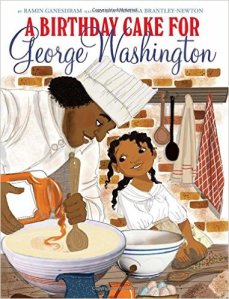
61iN6udp5EL._SX379_BO1,204,203,200_These questions are, unfortunately, not ones that can be relegated only to examination of the past.  The cultural and visual literacy with which we create and approach books remains controversial, as recent responses to the children’s picture book A Birthday Cake for George Washington (2015) show.  Its publisher Scholastic withdrew this book from distribution after much social media criticism of its depiction of slavery, centering on Hercules, the slave chef owned by our first president. 

Although Hercules was perhaps the U.S.’s first celebrity chef, after the fictionalized events in this book he later fled to freedom—a fact relegated by the publisher to end notes.  This was one criticism of the book.  Another was of the uniformly smiling slave faces throughout the book.  Even its author Ramin Ganeshram was not happy  with the illustrations by Vanessa Brantley-Newton. (She also wanted a different conclusion for the published text.)   While Ganeshram mentions that the “overjoviality” of these images also disturbed her, there is a further way those gleaming white smiles in evenly dark faces distressed me.  They were too like the stereotyped minstrel show “blacked up” faces once used to gleefully mock Blacks.  Is it possible that somewhere in the chain of command at Scholastic there was an initial failure of visual and cultural literacy that overrode Ganeshram’s objections?
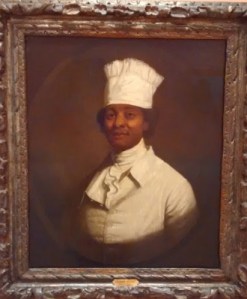
Hercules1A probable portrait of Hercules by renowned American painter Gilbert Stuart depicts a clear-eyed, serious man—neither smiling nor frowning.  Perhaps that image might have been included and otherwise used as inspiration in A Birthday Cake for George Washington. (Perhaps libraries which hold copies of this book might insert or display this image, appropriately captioned, in or near it.)  Even so, I know that I remain uncomfortable with Scholastic’s having ceased publication and distribution of this problematic book.  Their decision smacks too much of the burning and banning of books once common in Nazi Germany as well as the 1950s comics-fearing U.S.A.  And I am in agreement with the maxim that “Those who do not remember the past are doomed to repeat it.”  Visual literacy is one vital component to such collective memory.
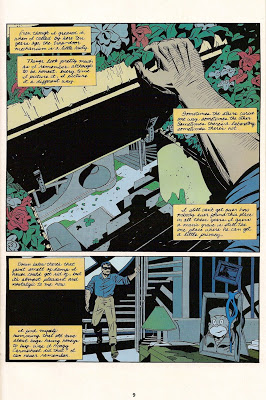
SP 09And it is visual literacy which provides one creative response to the issues raised by Eisner’s racist images of Ebony White.  The anniversary compilation of Spirit stories concludes with two later homages to the series.  In one of these—“ Last Night I Dreamed of Dr. Cobra,” written by Alan Moore and illustrated by Daniel Torres—Ebony Black only appears as an image, in a photograph framed and displayed on a tabletop.  He is remembered, his existence and worth validated, whatever discomfort this stereotypical character might have caused during the 1940s and 50s and certainly causes now.  Visually astute readers will catch this reference.  “Last Night I Dreamed of Dr. Cobra” was first published in 1998.  It was later collected in a volume of nineteen homage stories by multiple authors and illustrators, Will Eisner’s The Spirit: The New Adventures (2009;2016).    I am curious to see if and how Ebony White appears in other stories there, just as I am interested in reading other current and forthcoming volumes published by savvy Toon Books.  Such treasures provided by my library card!


Posted in comics, graphic novels, picture books | Tagged , , , , , , , , , , , , , , , , , , , , , , , , , , , , , , , , , , , , | Leave a comment

Cracking Codes and Making History: Then and Now

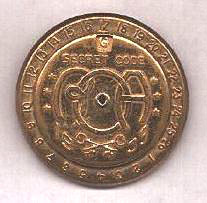
roa1935What connects award-winning graphic author/illustrator Gene Luen Yang and film luminary Orson Welles?   Both have cracked codes—figuratively, and in Yang’s case literally, too—and made history.  Welles did this back in the 1930s and 40s, when kids sometimes thought that access to power was as simple as owning the right “secret decoder” pin or ring.  Anyone—regardless of race, religion, or background—could supposedly become a member of exclusive clubs linked to cartoon heroes or superheroes.  Yet Black kids living under Jim Crow laws probably always knew better than to believe they would be equally welcome.  Certainly, Black actors of that era, when roles were not “blind cast” irrespective of race, had very limited opportunities.  That is why Orson Welles’ 1936 stage production of an all-Black Macbeth was a ground-breaking, historically significant event.  Its controversial New York City debut is the background of a fast-paced, fun-filled new graphic novel set in the swank Waldorf Astoria hotel, The New Deal (2015). 
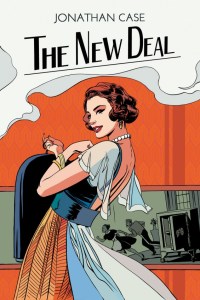
New-Deal-Cover-Jonathan-Case-565x848One of two central characters in this jewel heist mystery by author/illustrator Jonathan Cash is a Black actress cast in Welles’ play.  Teresa Harris’ “day job” is being a maid at the hotel, where she becomes both suspect and detective in the theft.  How her race also figures in this part of Teresa’s life is another reason I want to highlight Cash’s book today, the start of Black History Month.   Readers tween and up will find the novel eye-opening as well as entertaining.
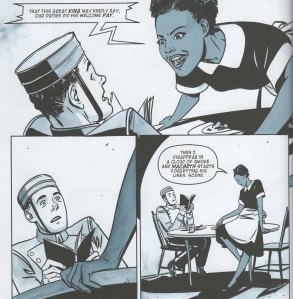
They may be shocked by the unthinking, blatant racism expressed by some of the hotel’s wealthy patrons, who assume Teresa is a thief.  One even calls her a “devil” and is ready to slap the young woman!  Even most of the hotel staff—all Caucasian—assume the worst about Teresa and casually use offensive language to describe her.  Cash’s ability to draw expressive features and body language make the many wordless panels here memorably telling as well. 

EPSON MFP image

EPSON MFP image

Yet The New Deal (a title reminiscent of President Roosevelt’s social programs, such as the one that financed Welles’ Macbeth) is anything but bleak.  Its swooping, angled perspectives and sometimes converging panels recreate the madcap pace of 1930s comic mystery films such as The Thin Man series.  The sometimes flirtatious banter between Teresa and bellhop Tommy O’Malley, her bumbling detective partner, also echoes the relationships of that era’s on-screen duos.  And, just as those black-and-white films end happily, Teresa and Tommy by the end of this blue-and-white novel outwit both the real “bad guys” and the clueless, racist police.  After a series of exciting, sometimes humorous chases and near captures—accompanied by sound effects dramatized in different lettering styles—Teresa and Tommy escape to a better life together in a cab.   Whether they will remain just friends or become interracial sweethearts (unusual for that period and its films) is unclear, but their happiness is evident.  The novel ends satisfyingly on the same mid-Manhattan street corner of its opening scenes.

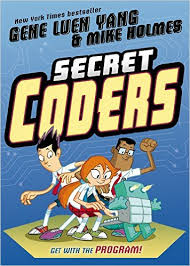
download (14)Gene Luen Yang’s latest stand-alone graphic novel, with its 7th grade protagonists, will appeal to upper elementary as well as tween readers.  Illustrated by Mike Holmes, Secret Coders (2015) is also a mystery novel.  It combines recognizable school routines such as lunch hour, gym class, and homework with mysterious, odd occurrences—puzzles solvable by understanding and using the binary code central to computer programming!  New student Hopper thinks Stately Academy looks “like a haunted house,” but she has no idea about what really makes it strange.  Struggling to fit in, Hopper  asks questions that win her one new friend, but also send her to the principal’s office and even into danger.
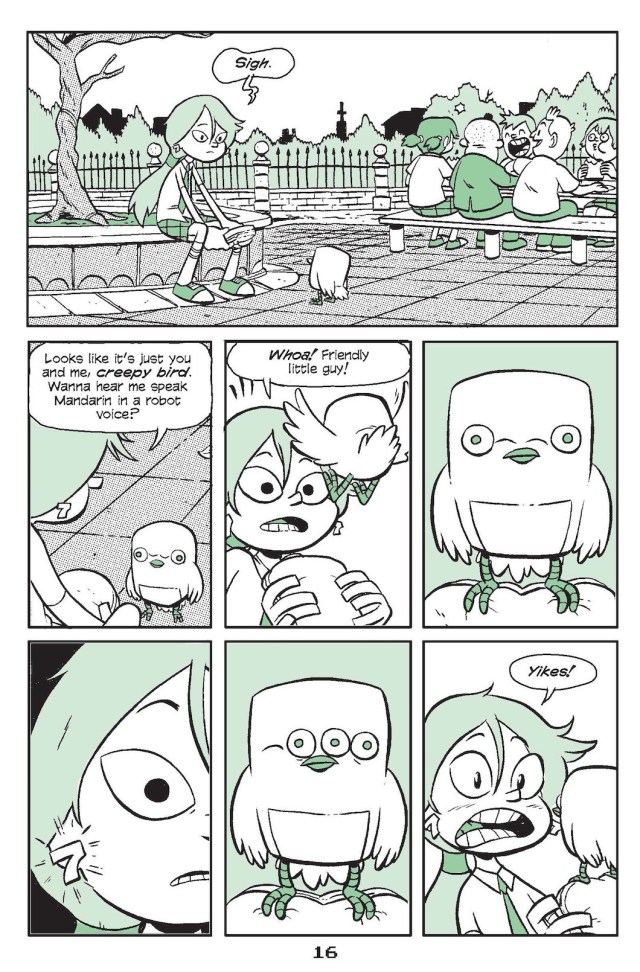

Why are all Stately Academy’s buildings emblazoned with the number “9”?  Who built the robot birds that fly around its grounds?  And who built the robot turtle that, by the end of the book, leads its kid characters to tumble into a hidden underground chamber? Gene Yang taught computer programming for more 15 years; he has said that “Secret Coders can’t replace a good computer science teacher, but I hope it gets readers interested in learning more.”   Each suspenseful chapter contains a different “lesson” about a computer code concept, yet Secret Coders is far from dull or didactic.

Secret_Coders-COMBINED-100-22

Its main detective characters, Chinese-American Hopper and an African-American boy named Eni, have too much personality for that–and too many lively exchanges and narrow escapes!  I particularly liked the way author Yang made the race of these characters just one part of the story, not the central element.  That integration into the narrative mainstream mirrors the evolving motion of racial integration in society as a whole.  Yang has also pointed out that his making Eni a popular, successful ball player breaks another stereotype—the idea that “jocks” are not smart or interested in “nerdy” ideas.  Nothing is that clear-cut in this green-and-white book, where illustrator Holmes’ cartoon-like drawings cushion frightening scenes with humor.  Secret Coders ends with a reference to an upcoming sequel, Secret Coders: Paths and Portals, and with a link to a webpage, where kids can download games and activities and learn more about the series’ creators.

Computer code is not the only kind of code author Yang has cracked.  Like Welles and the Black actors who performed in his Macbeth, Yang has brought different groups, with their own coded ways of understanding and experiencing the world, into new perspective for other people.  During Black History month, it is worthwhile to point out this kind of “code switching,” a term adopted by some of today’s National Public Radio producers and reporters who cover the intersections of race, ethnicity, and culture.  Code switching—recognizing and breaking down harmful barriers between people while respecting differences—is one of Yang’s demonstrated strengths as well as long-standing interests.

51zCS5BMbyLIn his multiple-award-winning graphic novel American Born Chinese (2006), Yang uses Chinese mythology to enrich his painfully humorous look at the identity problems of a child of first generation immigrants.  In his duology Boxers and Saints (2013, reviewed here in August, 2013), Yang dramatically conveys the brutal clash of cultures and religions in China during the Boxer Rebellion of 1899-1901.  In The Shadow Hero (2014, reviewed here in March 2014), along with illustrator Sonny Lieuw Yang entertainingly uses comic book history, Chinese lore, and immigrant experience to develop a Chinese-American superhero.  Their Shadow Hero is set during the era when Welles was producing that groundbreaking Macbeth

Just last month, Gene Luen Yang was acclaimed as the fifth National Ambassador for Young People’s Literature.   It is a history-making appointment, as he is the first tumblr_o0lp5xWNsu1tqptqbo3_5401graphic novelist to earn this distinction.  Yang has said that he will use his new, prominent position to advocate for reading without walls.  Walls or codes—both are metaphors for the barriers or blinkered vision that can limit or destructively separate people.  I look forward to hearing more from our new ambassador, as his own achievements introduce more people to the rich possibilities of graphic literature. 
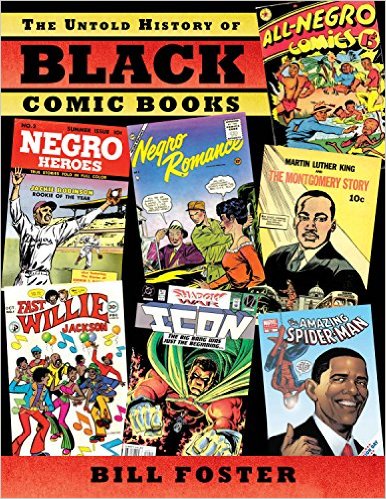
I also plan to catch up with Yang’s recent forays into some shared, ongoing graphic endeavors: new books in the Avatar: The Last Airbender series as well as a new run of Superman comics. I am curious about how this gifted storyteller is bringing his abilities and interests to the 61p3TAYcbAL._SX384_BO1,204,203,200_recent Airbender phenomenon as well as the longstanding, iconic Superman multiverse.  I have these volumes at hand, while I am still waiting for Bill Foster and Craig Yoe’s The Untold History of Black Comic Books (2016), due to be published later in this Black History month.  And I have just discovered and ordered a copy of a reissued graphic work very relevant to Black History month and this post: Voodoo Macbeth: A Graphic Novel (2006; 2015).  It is part memoir, part historical fiction about Orson Welles’ groundbreaking 1936 production.  The father of its author/illustrator, Norris Borroughs, was an actor in that play!  I will see if this work would also suit  tween and teen readers.


Posted in comics, graphic novels | Tagged , , , , , , , , , , , , , , , , , , , , , , , , , , , , , , , | 1 Comment

It’s About Time! Beginning Anew

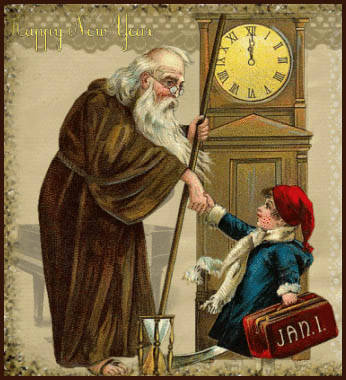
Father-time-Shaking-HandsIt’s a new year, but calendars only measure one kind of time.  Its passage is also reflected in our mirrors and the clothes our youngsters outgrow.  That straightforward march of days is why a new calendar year is often depicted by an old man flanked by a child.  Yet time is not just linear—as one of my favorite TV characters, the Doctor of “Dr. Who,” famously says, “It’s a big ball of wibbly-wobbly . . .time-y-wimey . . . stuff.” 

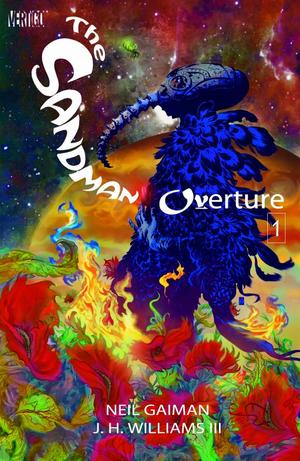
The fluid nature of perceived time—and our marvelous human ability to conceive its possibilities, to imagine alternative outcomes and even beginnings to events—is part of our story-telling capacity, our individual and collective imaginations.  We may not, like Dr. Who, be able to regenerate our physical selves, but we can and do breathe “new life” into old tales.  One way storytellers, including graphic ones, inspire and delight audiences is by letting us in on what happened before their stories began.  And if those “origin tales” are themselves somewhat mysterious or contradictory, we entranced readers usually do not mind much, if at all.  One such beloved comic book series with such rethought beginnings is my focus today.  And that focus all springs from an unexpected holiday gift from our son—a hot-off-the press, sumptuous graphic collection titled Sandman Overture: The Deluxe Edition (2015).

Sandman-Overture-1With this volume, collecting  six special comic book issues that appeared between 2013 and 2015, best-selling author Neil Gaiman with award-winning illustrators J.H. Williams and Dave Stewart return to the fantastic fictional universe of The Sandman comic book series (1989 to 1996).   More than twenty years have elapsed since readers held the first of the series’ 75 issues, but Overture details the events leading up to that first issue’s opening scenes.  We learn how and why the mysterious, mythical Sandman appears exhausted and imprisoned there.  More than that—since, as Gaiman notes, a musical overture “often contain[s] the main themes of the work”—we meet characters and see events connected to the entire, mind-boggling series.

This series’ loosely-linked issues contain a new mythology, with a pantheon of seven “Endless” supernatural beings that includes “Sandman” Dream (sometimes called Morpheus), and centers on how permeable the barriers are between the supernatural and daily life, between dreams and so-called reality.  Dream and his siblings Destiny, Death, Desire, Despair, Delirium, and Destruction range throughout human history in the series.  Along the way, some of its characters also include minor superheroes and villains from horror and dark fantasy comics published by DC Comics, the series’ publisher before Vertigo Press, DC’s more “mature” imprint.  The complexity of this cast of characters, plots, and themes, not to mention the sometimes mature topics pictured, makes the Sandman series best suited to readers teen on up.

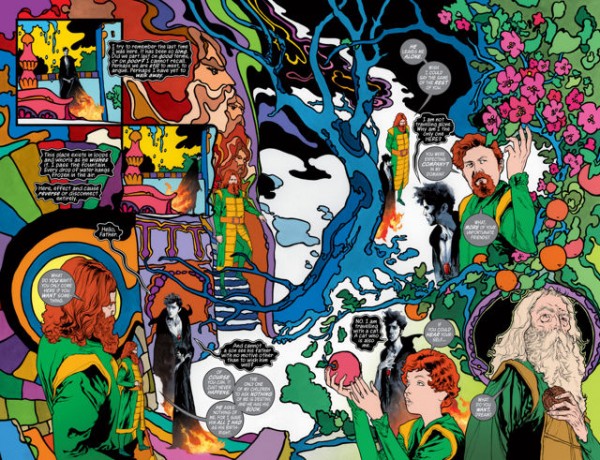
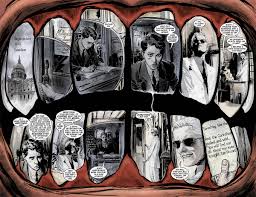
Are you uncertain where to begin or to suggest someone else begin with this 75 issue series, collected in ten volumes (1989 -1997)?  Author Gaiman ruefully understands!  He himself does not know if he would consider Sandman Overture “the eleventh book of Sandman . . .” or if “It’s Sandman #0 and Sandman Infinite” as well.  . . . [I]t fits like a weird little Mobius strip that actually attaches the back of Sandman to the front of Sandman again . . . .”   The ongoing, incremental nature of Gaiman’s storytelling parallels his view of time itself as non-linear, a major theme throughout these books.  Illustrator Williams and inker Stewart capture this wonderfully in a two-page spread depicting the character of red-haired “Father Time” simultaneously at four different ages.  The psychedelic intensity of Stewart’s colors is echoed by Dream’s chaotic reflections there, as he tries “to remember the last time I was here . . . . I cannot recall.  Perhaps we are still to meet, to argue.  Perhaps I have yet to walk away.”  

b1f3b97e9e6622b01c127c83e191fc08-600x460 (2)

The bold use of color—at times riotously psychedelic, at other points dramatically monochromatic or black-and-white—is a visual hallmark throughout the Sandman books, which have won multiple awards for illustration as well as writing.  Inventive use and twists on panel size and shape may be found on many pages or double-spreads. Often, there are no panels at all, as fluid, painterly images suggest the flow of time and memory.  At other points, line drawings alternate with photographed images designed to suggest raised textures on the page. 

download (13)

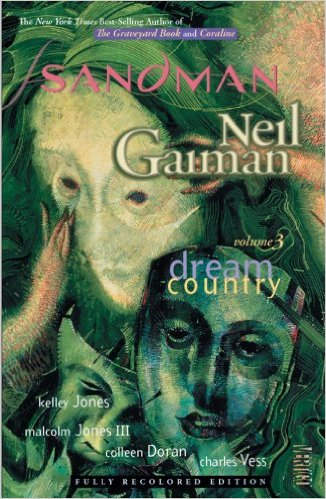
This bountiful creativity is spotlighted in one wonderful component of Sandman Overture—its extensive end notes.  Not only do Gaiman and illustrator Williams explain and demonstrate how they work together on its “Art Process” but Dave Stewart weighs in on the “Color Process.”  Todd Klein then details the “Letter Process” and Dave McKean vibrantly reveals what goes into “Constructing the Cover.”  Truly a feast for eyes!  Dwelling on these end notes will enhance a reader’s appreciation of any or all of the books in this series.   Yet I would suggest newcomers to The Sandman and its offshoots consider dipping into these works first in a ‘time-travelling’ way—with a specific middle volume, The Sandman: Dream Country, Volume 3 (1990; 2010).

516enR233hL._SX324_BO1,204,203,200_Its four separate “short stories” give a representative taste of the themes, tone, and varied styles of the overall series.  The third story there, “A Midsummer Night’s Dream,” illustrated by Charles Vess and imagining William Shakespeare’s encounter with real Faeries, won the 1991 World Fantasy Award for best short fiction.  Its rich combination of human emotion with eerie humor and suspense (10 year-old Hamnet feels ignored by his playwright father and actors compete for attention, while the “real” Faerie Puck has needle-sharp teeth he wants to use!) is sure to satisfy.  Another stand-out story here is the “Dream of a Thousand Cats,” where humans are small pets to giant felines.  Its other tales involve an enslaved muse and a minor DC superhero trapped by her own special powers.   Dream or another of the Endless appears briefly in each story.  Whether this volume leaves one eager to move onto the whole Sandman series or feeling content with just those four, Twilight Zone-like tales, the reader will have experienced some of the best in contemporary graphic storytelling for teens and adults.  An added feature in this collection is Gaiman’s end note, the working script he wrote for illustrator Ness to help him illustrate the cruelly imprisoned muse story, “Calliope.”

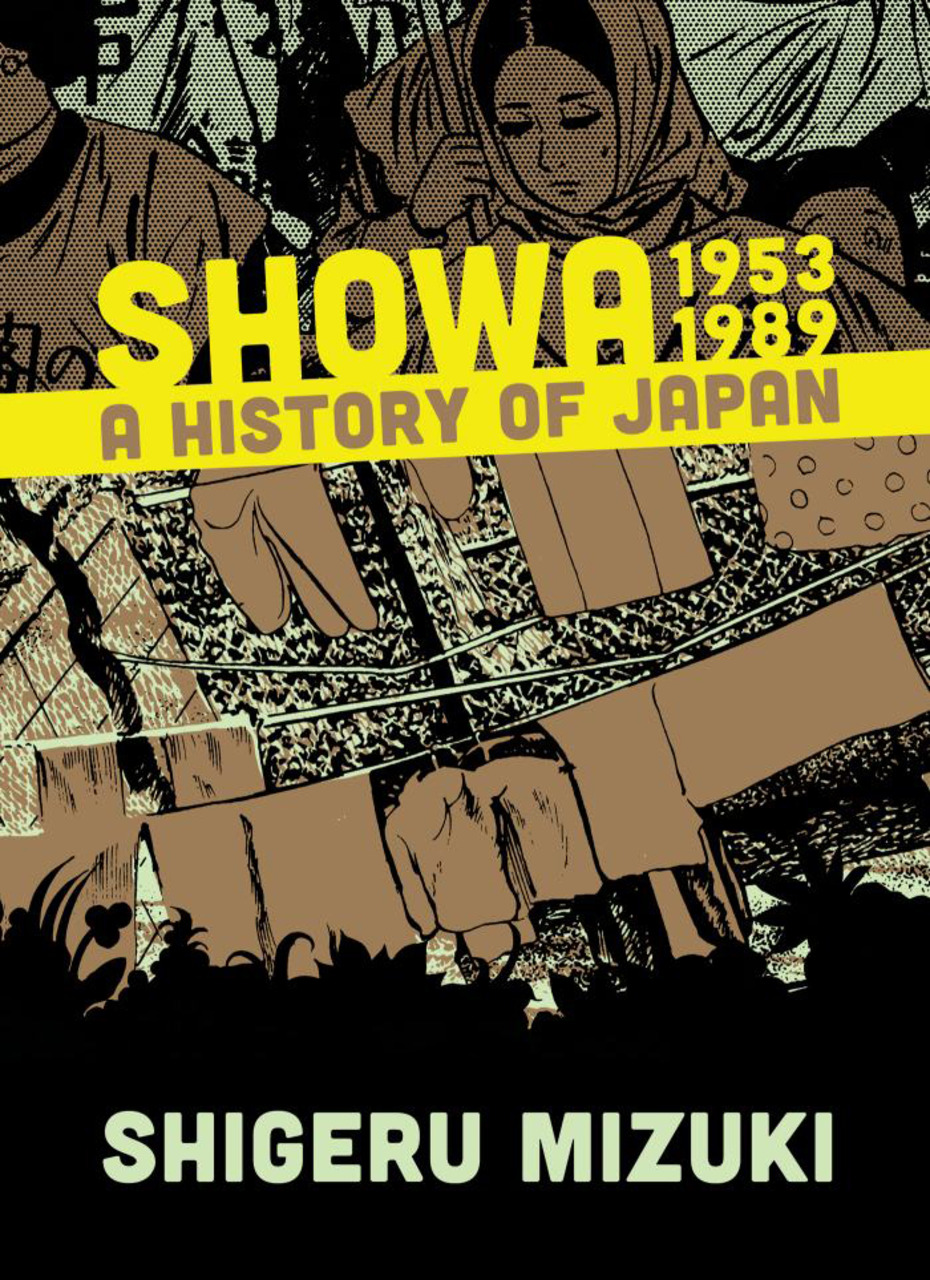
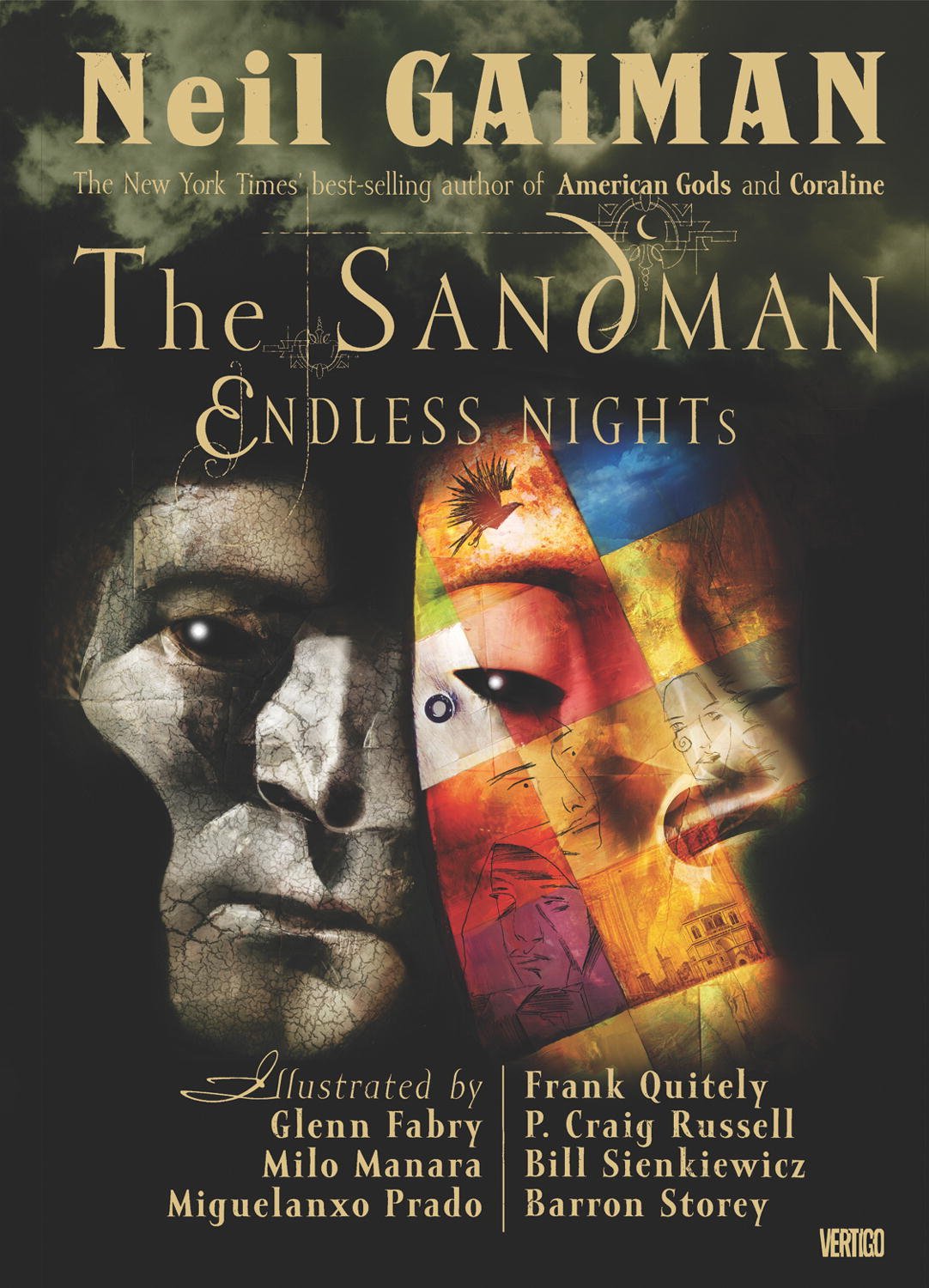
ShowaVol4While the human imagination is not bound by Father Time, our bodies sadly are.  World-renowned, influential Japanese author/illustrator Shigeru Mizuki died last month at the venerable age of 93.   (His work was reviewed here in October, 2013 and also backgrounded in March, 2014).  I look forward in the coming weeks to reading the final volume, just translated into English, of Mizuki-san’s blisteringly sardonic,  detailed four volume work about 20th century Japan: Showa: A History of Japan: 1953 to 1989 (2015).  His just-translated graphic biography of Hitler (2015) also awaits me.  Since other library patrons also want to read these 71oTDVA-ezLbooks, I may not be able to linger with these copies as I might wish!  On the other hand, I own the Sandman volume of seven “spinoff” stories that won the Horror Writers Association Bram Stoker award for 2003’s best illustrated narrative. I can take my time to shiveringly savor The Sandman: Endless Nights (2004), written by Neil Gaiman and illustrated by seven different, gifted illustrators.  Contemplating the past and imagining all sorts of time, space, and places—a fine way to begin a new year. 


Posted in comic book collection, comics, manga | Tagged , , , , , , , , , , , , , , , , , , , , , , , , , , , , , , , , , | Leave a comment

Diversity: The December Dilemma and Beyond

12212011_Menorah-Jane-dsc_2033_600The month of December has long foregrounded issues of diversity in multicultural countries.  As Christmas approaches in predominantly Christian countries, how do we acknowledge the presence and holidays of other religious groups?  Some non-Christian parents even call the problems raised in our families by widespread Christmas decorations and gift-giving the “December Dilemma.”   Finding solutions to this dilemma is akin to another responsibility all adults bear.  How do we explain to young people that history is woven of many strands, its warp and woof sometimes obscuring the experiences of different groups?
61JRfCm3eTL._SX258_BO1,204,203,200_This past month—with its shocking Islamic terrorist attacks in Paris and elsewhere—had me shakily looking backward as well as ahead.  I despaired that my February, 2015 blog post, written in response to terrorist attacks in Paris last January, could have been reposted here today. Only the introductory remarks in “Jews, Muslims, Christians: The Rabbi’s Cat Speaks” would have needed updating. On a similar, but thankfully non-violent note, recent controversy raised by a new non-fiction picture book highlights another aspect of the  questions about history and culture so prominent in December.

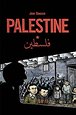
51dIMoYzd0L._SY412_BO1,204,203,200_Writers and readers of color, in particular, have taken  issue with the way in which slavery is depicted in A Fine Dessert: Four Centuries, Four Families, One Delicious Treat (2015), written by Emily Jenkins and Illustrated by Sophie Blackhall.  This history of the dessert known as “blackberry fool” even contains a recipe for it.  Opponents of this work’s depiction of life in 1810 South Carolina (one quarter of the book) say  its creators obscure slavery’s real horrors, with Black characters—a slave mother, her young daughter, and a young boy—who are too calm and sometimes smile.    Their critiques remind me, in these years of terrorist attacks, of the different ways twentieth century history in the Middle East is framed.  For many people, 1948 marks the celebratory establishment of the state of Israel; yet displaced Palestinians, among other people, refer to that year and Israel’s recognition by the United 51fxp5VLdWL._AC_UL115_Nations as “the Catastrophe.”  These conflicting views are vividly portrayed by graphic journalist Joe Sacco in such works for adults and older readers as Palestine (1996) and Footnotes in Gaza (2009).  There are no easy answers to the real-life problems stemming from these historical events, among others, however they are labelled.
Similarly, on a smaller scale, reading A Fine Dessert did not lead me to an easy, clear-cut stand towards its controversy. I thought the expressive facial detail and body language of Blacknall’s illustrations, combined with the final “Note from the Author” and “Note from the Illustrator,” did provide enough context for discussing those brief glimpses of 1810 South Carolina, mired in a slave economy.    Unease and fear are displayed by the Black characters, and the White girl being served by her age-mate also seems uncomfortable.  Yet the casual reader might not notice these subtle cues in the illustrations of this dessert’s history and might not even bother to read the end notes. And the  picture book text itself never overtly mentions slavery beyond one word, “master.”  

Fine Dessert02

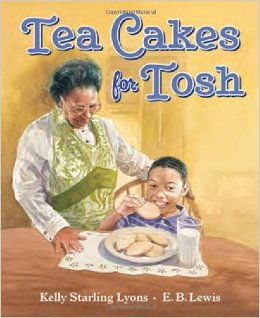
51JQzEKw96L._SX258_BO1,204,203,200_For those reasons, I surprisedly found myself in some agreement with critics of this well-researched, charmingly drawn and written book.  To readers who are or might be dismayed by its 1810 section, I would point out picture books which focus more intensely on the anguish caused by slavery.  Tea Cakes for Tosh (2012) written by Kelly Starling Lyons and illustrated by award-winning E.B. Lewis, with its comparable central element being another mouth-watering dessert, complete with recipe,  is one such “remedy.”  As they bake together, grandmother Honey tells grandson Tosh about their family’s history as slaves.  Long ago, she explains, their ancestor Ida, another baker, “risked being whipped to give the children a taste of sweet freedom ” embodied in tea cakes  slated only for the master’s table.  Sepia pages illustrate those past events.  Tosh’s love for Honey, even as she begins to lose memories, and his appreciation of their family history make this slender book resonate as cultural legacy as well as intimate family drama.   Full-color illustrations of its modern-day events add further warmth here.  You might opt for this moving volume. Or, perhaps the young readers in your life would benefit from a paired book gift or display: A Fine Dessert along with Cakes for Tosh. That double presentation would be my own way of responding to this recent controversy. 

Kelly Starling Lyons has blogged persuasively about the positive impact of books designed to support cultural diversity and expand multiple perspectives of history. So, today I take my cue from her, presenting some brand new and recent graphic works which—just in time for Christmas–celebrate non-Christian cultures and holidays.   Perhaps you will want to foreground one or more of the following books for the young readers in your life.  These works—some standalones, others sequels or part of a series—would make fine special occasion or holiday gifts, whichever holidays you or the recipients celebrate:  

Hereville: How Mirka Caught a Fish (2015), written and illustrated by Barry Deutsch, with backgrounds by Adrian Wallace and colors by Jake Richmond is the third, delightful volume about 11 year old 51ohxqwBc4L._SX324_BO1,204,203,200_ (1)Mirka. Its wryly humorous subtitle—“Yet Another 11 Year Old Time Travelling Orthodox Jewish Babysitter”—will come as no surprise to fans of Hereville: How Mirka Got Her Sword (2010) and Hereville: How Mirka Met a Meteorite (2012) , both reviewed here in April, 2013.  Deutsch uses humor and smart insights about family relationships to depict both daily life inside a closed, ultra-Orthodox community and rebellious Mirka’s fantastic encounters with supernatural creatures and events.  Even as curious Mirka sometimes disobeys parents and community rules, her love for family and tradition remains strong. In fact, as in the first volumes, family bonds and tradition help Mirka overcome the fantastic dangers she encounters.  Here she thwarts a treacherous enchanted fish! 
Life in fictional Hereville (similar to real-world Chasidic  communities in New York and New Jersey) is not typical for most Jews, but the warmth with which Deutsch draws his expressive, slightly cartoonish characters and their interactions will engage readers regardless of their religious affiliation or non-affiliation. As in the earlier volumes, an array of graphic elements support and enhance the narrative: frames of different sizes and shapes, close-ups, full and double-page spreads, and varied typography and word balloons are just some of the techniques skillfully employed in this story centered on battling sisters and mother-daughter love and misunderstandings.  Color is also used deftly to communicate different moods, time periods, and situations.  While How Mirka Caught a Fish can be read on its own, its revelations about Mirka’s sharp-witted stepmother Fruma and its references to past adventures will be savored even more by readers of Deutsch’s first two books.

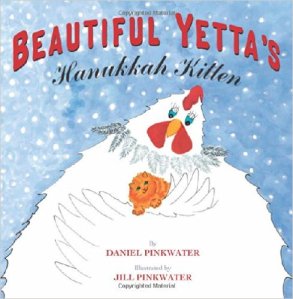
Beautiful Yetta’s Hanukkah Kitten (2014), written by Daniel PInkwater and illustrated by Jill Pinkwater, is a picture book that will be relished even by readers unfamiliar with their earlier Beautiful Yetta: The Yiddish Chicken (2010). 51t52wam+0L._SX487_BO1,204,203,200_Both colorful works have text in three languages: English, Yiddish, and Spanish—a mélange authentically reflecting the multicultural experiences of their contemporary New York City setting.  The warmth and fellow-feeling that cross species lines—here between kitten and birds and earlier, between chicken Yetta and the South American parrots who help her survive—are heartwarming.  Simple, colloquial language blends well with vivid colors, preventing the story from becoming too sweet by the book’s end, when every creature and person has the chance to enjoy a savory, traditional Hanukkah food.   An additional treat for readers may be found online here, in an NPR interview where Daniel PInkwater and others read the first Beautiful Yetta aloud, as each page is displayed on-screen.  
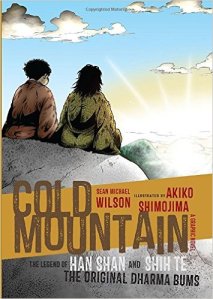
Teens interested in Zen Buddhism or poetry will be intrigued and charmed by Cold Mountain: The Legend of Han Shan and Shih Te, The Original Dharma Bums (2015). 51YFdDQ7SpL._SX353_BO1,204,203,200_Written by Sean Michael Wilson and illustrated by Akiko Shimojima, with poetry translations by J.P. Seaton, this graphic work has two main parts.  First, Wilson compiles and retells stories about the two Chinese men, friends now regarded as Buddhist bodhisattvas or saints, who may have lived between 600 and 900 C.E. Their legendary humor and eccentric behavior questioned their society’s traditional rules and values.  The next half consists of poems they wrote, embodying Zen Buddhist views of the natural world and human existence.  Shimojima’s black and white illustrations are really inspired here.  Her selection of such natural objects as fruit trees or an aging human body give clear meaning to poetic abstractions, while her shifts in perspective and distance, with close-ups being particularly telling, enhance each poem’s progression of ideas and major points.

61lQ4Am6tnL._SX381_BO1,204,203,200_Ramadan Moon (2009), a picture book written by Na’ima B Robert and illustrated by Shirin Adl,, does a fine job of capturing the feelings experienced by observant Muslims during this month-long holiday.  Ramadan is celebrated at different points in the year determined by the Islamic calendar’s lunar cycles.  We both see and hear how the moon’s waxing and ebbing shape the holiday for one observant family and their community, uniting them all as well with Muslims around the globe.  In that harmonious family, Robert in the voice of an older child observes, “Our family bows, like one body, Before the break of day.”  Fasting between sunrise and sunset each day is not a chore but a religious obligation that brings a sense of joy and peace.   Even as Robert’s characters celebrate the end of Ramadan with its traditional feast day, her narrator notes that they are looking forward to next year’s Ramadan moon.  

Illustrator Adl depicts the many races of global Islam but she and author Robert do not note the diverse practices within this world religion.  Illustrations only show women clothed in traditionally conservative ways: either wearing a hijab, which covers the entire body and chest, or a burqua, which covers the entire body and sometimes masks eyes as well.  Ramadan Moon answers questions about this holiday in inspiring ways, but it also may leave some young readers with questions about how contemporary Muslims dress.  

 510s0jFMnxL._SX323_BO1,204,203,200_ (1)Ms. Marvel Volume 4: Last Days (2015), just published, features teenager Kamala Khan, the first Pakistani-American, Muslim superhero.  It contains issues 16 through 19 of the comic books written by G. Willow Wilson and illustrated by Adrian Alphonsa and also includes related material from issues 7 and 8 of Amazing Spiderman (2014).  Last Days may be read on its own, but fans familiar with the preceding volumes will appreciate it even more.   (The award-winning Ms. Marvel Volume 1: No Normal [2014] was reviewed here in January, 2015, and Ms. Marvel Volume 2: Generation Why [2015] was reviewed in May, 2015.  Since then, Ms. Marvel Volume 3: Crushed [2015] has also seen print.)

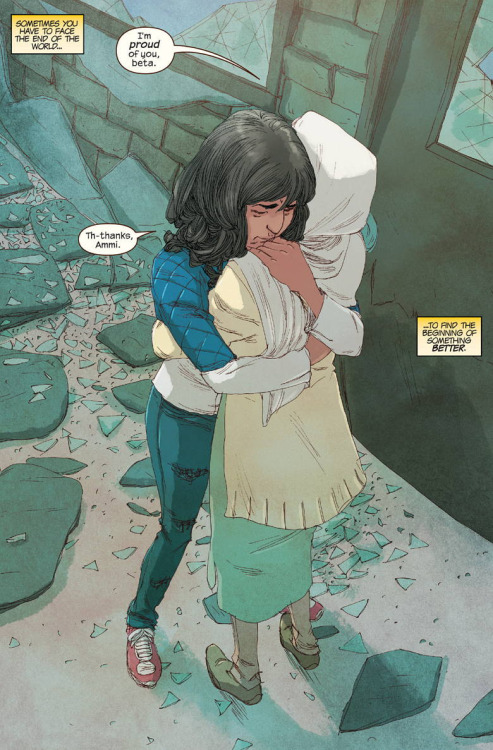
Kamala is obviously not the traditionally clothed and observant Muslim woman who appears in Ramadan Moon!  Yet her superhero costume is designed to conform in some ways with Islam’s rules for modest dress.  Kamala also continues to find value and support in her faith, even as she struggles as many teens do to juggle family and religion with emerging adult goals and desires.  As her hometown of Jersey City, New Jersey faces an overwhelming alien invasion, Kamala recalls the words of her imam about being accountable for her own actions.  Kamala chooses to be daring in defending others and to put off for now any romantic involvement.  Confessing her superhero identity to her traditionally dressed, immigrant mother is one of this volume’s emotional high points.  A full page spread centered upon her accepting mother’s embrace, emotional Kamala’s relieved face, and their few, heartfelt words visually reinforces the intensity of this moment.  The close-ups and shifts in perspective that precede this embrace astutely support this climax, versatile graphic techniques also evident throughout the book’s overlapping storylines.  

tumblr_nxqoafcUse1u496xso1_500Those story-lines include ones that contain high-energy fun, such as Kamala’s interactions at a high school dance and her star-struck, tongue-tied exchanges with older superheroes.  The story line involving her overly serious, very traditional older brother Amir, while it continues their usually good-natured bickering, also has a new and serious element.  Just as terrorist recruiters seek to enlist religious, disaffected Muslims, a supervillain seeks to enlist Amir in his criminal enterprises by forcibly giving him superpowers.  As his henchman remarks to Kamala, “Do you think some little part of Amir isn’t angry? Looking like he does, believing what he does . . . you think he doesn’t wish he could live in a world where he gets to make the rules?” Author Wilson is, I believe well aware of the stresses and fractures within Islam today.  Amir, however, after being rescued by Kamala later rejects the possibility of superpowers, opting instead for traditional Islamic prayer, even if it has to be in a section of the besieged school gym.  This section is identified with teenage sincerity and political correctness as the “Nondenominational, nonjudgmental prayer area.”   That signage is another bit of fun provided by Wilson and illustrator Alphona.

If deciding which books to buy, borrow, or order for young readers is one of your dilemmas this December, I hope this overview of some culturally diverse works will help.   Perhaps you will decide to pair books from different traditions or offer ones which approach history from somewhat different perspectives.  Whatever your choice, happy holidays and happy reading!


Posted in comics, graphic novels, picture books, Uncategorized | Tagged , , , , , , , , , , , , , , , , , , , , , , , , , , , , , , , , , , , , , , , , , , , , , , , , , , , , , , , , , , , , , , , , , , , , , | Leave a comment

The Marvels and Pleasures of Rereading

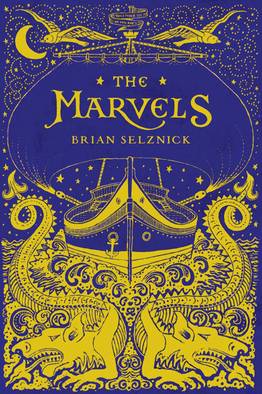
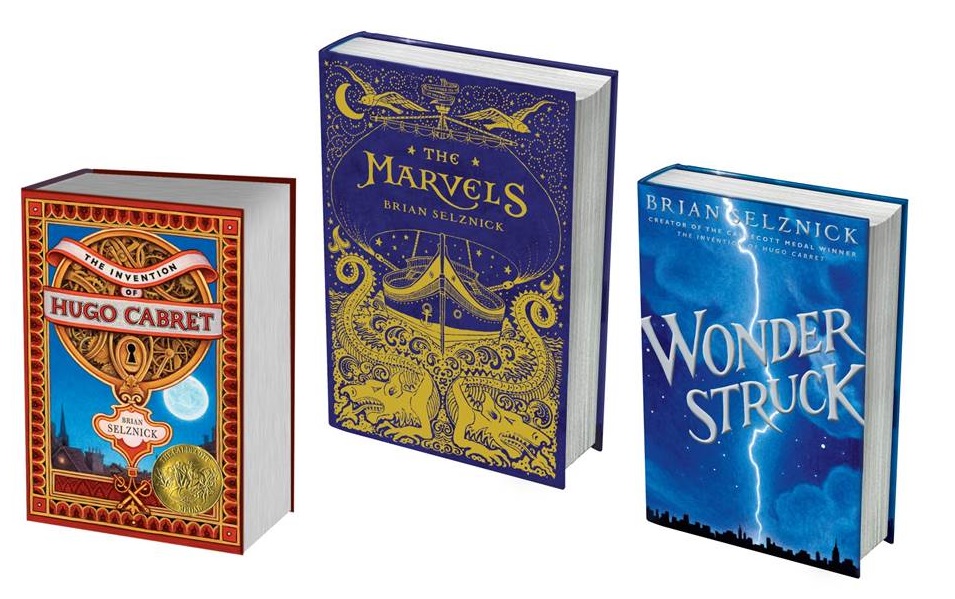
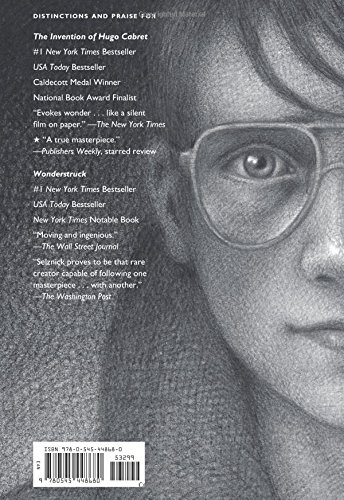
AR-AK674_SELZNI_DV_20150825173338I am smiling as I sit down today to share thoughts inspired by The Marvels (2015), the newest beautiful book by award-winning author/illustrator Brian Selznick. The Marvels continues the hybrid format—interspersing pages of prose with pages of wordless visual narrative—that Selznick pioneered in The Adventures of Hugo Cabret (2007) and Wonderstruck (2011). In Selznick’s three books, tracing the stories told through pictures and then piecing together their meaning in relation to the prose make the very process of reading (or rereading) its own mysterious, very satisfying adventure. I certainly looked forward to and enjoyed rereading Hugo and Wonderstruck before sitting down to blog today!

Growing older, I take different pleasures in rereading than I once did. Not surprisingly, some of my insights and needs have changed over the years. I marvel now at how I view some characters in Great Expectations, Kidnapped, and A Wrinkle in Time differently than I did decades ago. Similarly, Yeats’ collected poems sometimes resonate differently for me than they did before I had my own silver hairs. These works are four of the seven tomes that book loving, thirteen year-old Joseph Jervis hauls along with him when he runs away from boarding school in The Marvels. They provide this 1990s British character with another form of escape into new worlds, and Selznick suggests Joseph rereads them as compulsively as many tweens and teens do their own favorites – as I myself once reread.

BrianBooks

Selznick himself is ruefully well-aware and supportive of the different ways we understand life lessons and absorb stories: the epigraph in The Marvels, repeated several times throughout the book, is “You either see it or you don’t.” A casual or younger reader might not see all the connections in this book’s lengthy visual family history, beginning in 1766 and spanning more than 200 years and 400 pages. Such a reader also might not have interest in the author’s Afterword, which explains how The Marvels’ sometimes fantastic coincidences and events sprang from an unusual British “museum” one may actually visit today, the Dennis Severs House in London.

BN-JV115_marvel_G_20150812115514

Yet The Marvels may be savored on this more casual, incomplete level as well as being relished by readers who read closely—and reread carefully, if not compulsively. Its pleasures are multiple, whether “You either see it [fully] or you don’t.” Whether readers here remember Great Expectations as a well-loved classic or are taking note of this title for the first time is ultimately immaterial. The same can be said about Selznick’s references to several plays by Shakespeare. Knowing their plots enhances appreciation of The Marvels, but is not crucial to its own plot. Similarly, knowing about the AIDS epidemic of the 1980s and 90s adds another dimension to the mystery Joseph and his new friend Frankie solve, but this knowledge is not needed to comprehend the heartbreak of another main character. The only limits on readership of The Marvels I would point out are the ones bound up in its hardcover heft: more than 600 pages of high-quality paper, edged in gilt, may be a lot for some readers (young and old) to physically handle comfortably! I myself think this sumptuous tactile experience well worth the bother, even though an e-book version is also available.

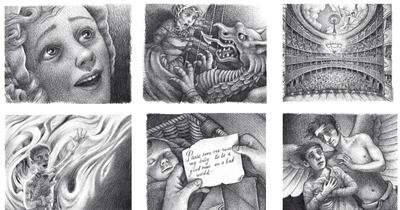
bf529991-2076-4b23-a48e-6c6cf4f32e98_400Unlike Hugo Cabret and Wonderstruck, works which intertwine their visual storytelling throughout each volume, The Marvels only employs wordless storytelling to begin and end the book. But what a remarkable, engrossing beginning and ending these are! We are caught up in the sweep of their mysteries, told in double-page spreads drawn in Selznick’s characteristic style: cross-hatched, deeply-shaded black-and-white penciled images that capture people and events in realistic detail. This realism makes each twist and turn of events an even bigger, more emotional surprise—emotions further enhanced by Selnick’s cinematic use of close-ups and shifts in perspective. These techniques very effectively spotlight dramatic moments and convey shifts in time and place.

What seemingly begins as a fantastic adventure—a young woman being threatened by a fierce sea monster—turns into the more realistic tragedy of a fatal storm at sea. And that young ‘woman’ turns out to be Billy Marvel, the twelve-year old boy who by a series of coincidences founds a 200 year-long acting dynasty, the book’s eponymous Marvels, famed for their Shakespearean roles. Boys playacting women, a shipwreck, abandoned babies, stern parents, girls pretending to be boys, rediscovered relatives, friends and lovers separated by cruel fate but later reunited—these are all 51Ad08MXYsLvery Shakespearean situations (for those familiar with the Bard). And these classic plot elements are echoed in Joseph Jervis’ 1990s experiences, which wrap up in a 40 page, wordless ending that carries his marvelous story forward into Joseph’s adulthood in the year 2007. I will not spoil the pleasure of the satisfying symmetries and surprises there, taking my cue from Selznick himself and noting “You either see it or you don’t,” a maxim which applies to how one views life as well as fiction. Not certain or hearing questions about what has taken place in adult Joseph’s life by 2007? I respectfully suggest some rereading . . . and of course I would be happy to have you comment here!

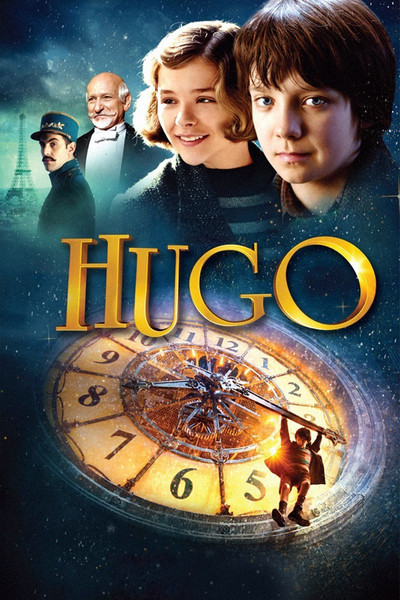
Have you read or reread The Adventures of Hugo Cabret yet? I encourage you to experience its fast-paced reimagining of early movie history. Similarly, go be dazzled—whether for the first time or the second—by Wonderstruck, Selznick’s take on Deaf culture and education in 1920s and 1970s U.S.A. As a longtime Minnesotan, I was particularly tickled to reread Wonderstruck because one of its twined stories begins in our state’s northern Gunflint Trail large_fkeaJr29ypea1n24gzspsc7qK44area. Or, treat yourself and your young readers to a viewing of Martin Scorsese’s award-winning 2011 film version of Hugo. Selznick also authored a well-received book about the making of this movie, The Hugo Movie Companion: A Behind the Scenes Look at How a Beloved Book Became a Major Motion Picture (2011).

Perhaps The Marvels will inspire you to search out a print or filmed version of one of the Shakespeare plays it mentions. You and young readers might download (12)begin together with one of the many brief scenes from these plays already freely available online. As for me, I recently noticed a much shorter Brian Selznick picture book displayed for Halloween at my local library. I look forward now to catching up with 10 year-old Alonzo, the central character in Selznick’s spooky The Boy of a Thousand Faces (2000).

Posted in graphic novels, hybrid books, picture books | Tagged , , , , , , , , , , , , , , , , , , , , , , , , , , | Leave a comment

Refugees: Haunting Thoughts at Halloween

61vgadBGgmL._SX376_BO1,204,203,200_Nowadays, Halloween is a time for kids to play at being scared or scary.  Wearing fierce masks or dressing up as superheroes, children reassure themselves that monsters do not exist and that they themselves can be powerful. There is really nothing to fear lurking under that comfortable bed!  This is the tradition carried on in The Little Shop of Monsters (2015), a brand new picture book published just in time for Halloween.  The sound-rich rhymes composed by veteran author R.L. Stine and the brightly-colored, loveable monsters drawn by award-winning Marc Brown reassure young readers and listeners.  In that shop, they face nothing worse than stinky smells, yucky sneezes, slimy hugs, or sneaky tickles.  Yet as we all can see on the nightly news, there are very real horrors facing children in many parts of the world.  Haunting images of young refugees—fleeing war, famine, and poverty—remind us that many, many children are now experiencing monstrous conditions.  And perhaps some of the people they fled or those now blocking their way do indeed appear to be real-life “monsters” to these children.

Today, I spotlight graphic works that focus on child refugees, elementary school age and younger.  Their perceptions and half-understandings of the chaotic world around them are the lens through which we poignantly see both past and contemporary events.  The empathy these works encourage will provoke readers to thought, discussion, and possibly even action.  I also look briefly at how the graphic format nowadays is being used as a tool to help refugees with displacement and resettlement.   Sadly, while such tools typically welcome refugees to new lives, some works seem designed to say “Stay put” or “Stay away.”

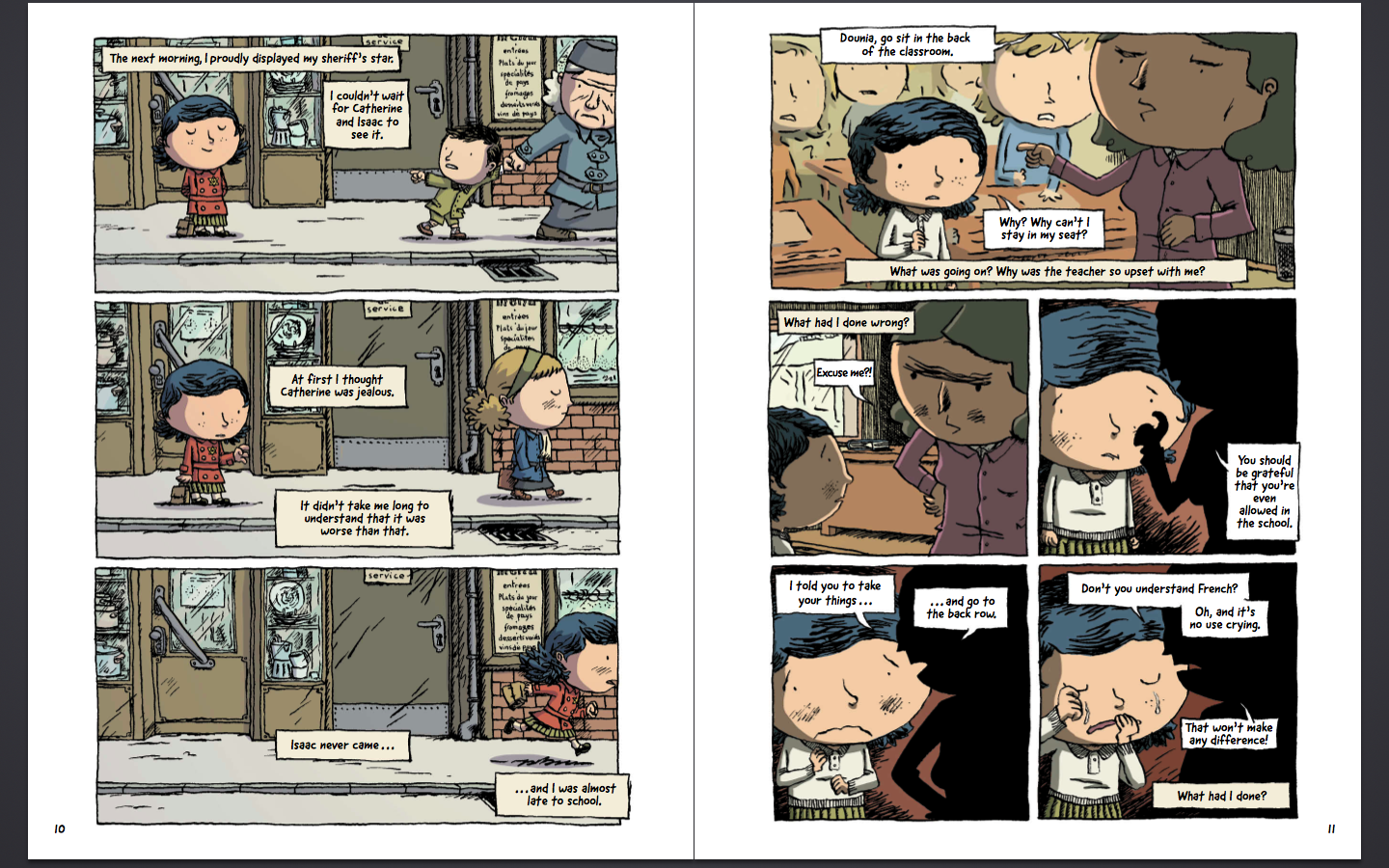
51IjiBeVNFL._SX387_BO1,204,203,200_Young girls are the main narrators in two acclaimed graphic novels about World War II refugees.  Hidden: A Child’s Story of the Holocaust (2012; 2014), originally written in French by Loic Dauvillier and illustrated by Marc Lizano, depicts how a Jewish seven year-old has to flee and hide from the Nazis who have  conquered France.  She is so young that she believes her parents’ early attempt to shield her from harsh truths:  they say that the yellow star being sewn onto her coat is a “sheriff’s star” rather than the conspicuous star of David all Jews have been ordered to wear!  Young Dounia’s innocence is soon shattered when some French classmates and teachers begin to ostracize Jews.  Later, forcibly separated from her parents but then sheltered by kind Christian farmers, she spends years “hidden” in plain sight, pretending to be their daughter.  Eventually, Dounia survives to become the elderly woman we see at the beginning of this book, confiding her war time experiences to her own young granddaughter.

Screen-Shot-2014-01-29-at-12.39.19-PM

Colorist Greg Salsado does a great job separating time periods and moods by color palette. Grandmother Dounia comforts her granddaughter in the warm orange tones of a nearby, nighttime fireplace, while olive green and drab greys and tans background the daytime horrors of World War II.  Marc Lizano’s cartoon-like figures, with heads overlarge compared to their bodies and features merely suggested, effectively contrast the innocence of such childlike drawing with war’s adult horrors.   Panel size and perspective shift to emphasize overwhelming emotions, with close-ups of elderly Dounia and a final full-page panel dramatically conveying the results of her finally telling this story to her entire family.  This book is so intimately vivid that readers may be surprised to learn that Dounia is a fictional character.  In an interview, author Loic Dauvillier explained that Hidden “is a fiction I built from testimonies and writings I accumulated.  Everything is false and unfortunately it’s all true.”   Hidden’s truths—translated into English by Alexis Siegel—won it the  2015 Sydney Taylor Book Award for older readers and recognition as an Honor book in the 2015 Mildred Batchelder Award competition.

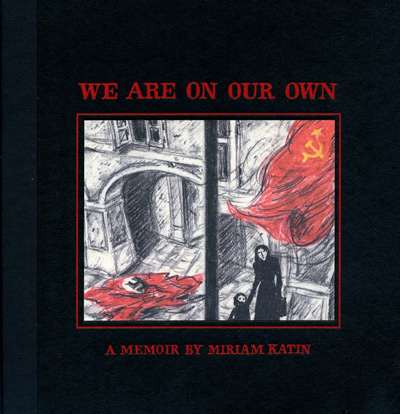
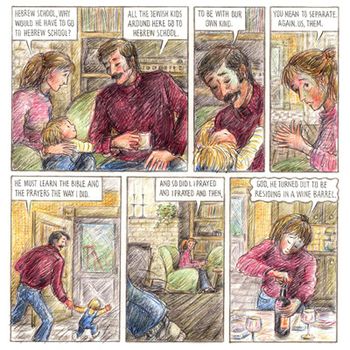
t-cover-smUnlike Hidden, We Are On Our Own (2006) is autobiographical.  Its author/illustrator Miriam Katin was 63 when this powerful memoir of her girlhood in WW II Hungary, her first published book, appeared.  Ironically, while Katin’s stand-in protagonist (called Lisa) is younger than Hidden’s Dounia, what “Lisa” sees, experiences, and later grapples with as an adult makes We Are On Our Own better suited for readers teen on up than the all-ages Hidden.  Toddler Lisa, accompanying her mother as they flee Nazi round-up, only half-apprehends events: she believes the Nazi officer who repeatedly forces her mother to have sex is a “nice man” because he brings chocolates.  She later thinks her hospitalized mother is “sick” rather than undergoing abortion after another rape.  Lisa is also literal in the way of very young children, believing that God inhabits any object adults associate with the deity, whether that be the Torah (Hebrew bible), a St. Anthony pendant, or a cask of rare wine.  All three figure in this memoir as she and her mother move from one temporary refuge to another.

OnOurOwnBWAs the Torah burns, the pendant is lost, and the wine plundered, Lisa continues to search for the God meant to protect her.  She even describes herself as “the God of my doggie” since she provides this stray with food.  Yet she cannot protect her dog from a soldier’s bayonet thrust.  By the end of the book, after she and her mother survive the ravaging Soviet soldiers who defeat the Nazis, 6 year-old Lisa has come to accept her atheist father’s viewpoint: that “we are on our own . . .  that’s all there is.”  Heartrendingly, Lisa enacts this realization through play and her still-childish, literal comprehension:  She inflicts each stage of her refugee’s flight on a doll, attacking it first with a ball and then a fork, all the while recalling the soldier who had gutted her dog. Emotionally spent, Lisa in the last page’s central panel ponders God’s seeming absence in terms of the Hebrew prayer book her mother was forced to destroy: “And what if Mommy burned that God after all?”

Katin’s color choices reinforce the quiet intensity and dramatic impact of her memoir.  Most of young Lisa’s account is told in black-and-white, with impressionistic, penciled drawings conveying both the haste required by refugee flight and the imperfectly understood world of young childhood.  In this bleak, colorless world, rare instances of red signal danger: a Nazi flag flutters or falls, only to be replaced by the Soviet banner.  Color 20070413_ss8also reinforces the book’s few, dramatic time shifts: full-color pastel pages illustrate events set between 1968 and 1972, when the adult Lisa herself has become a mother.  We see how her childhood experiences and loss of faith shape Lisa as a parent.  Katin’s placement of some solitary panels, centering them on a black page,  and her judicious breaking of panel frames, enhance the tempo of her storytelling.  Our eyes slow down or speed up at moments appropriate to the memoir’s moods and events.  We Are on Our Own has won several international awards, including the 2007 Inkpot Award, and has been translated into a half-dozen languages.  In my view, though, this memoir deserves even more prominence.  Its subtle, complex presentation of a child refugee’s world-view is stunningly insightful and memorable.

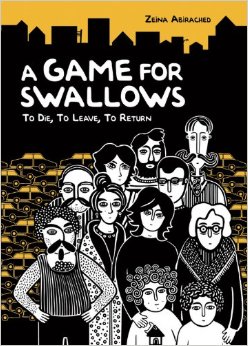
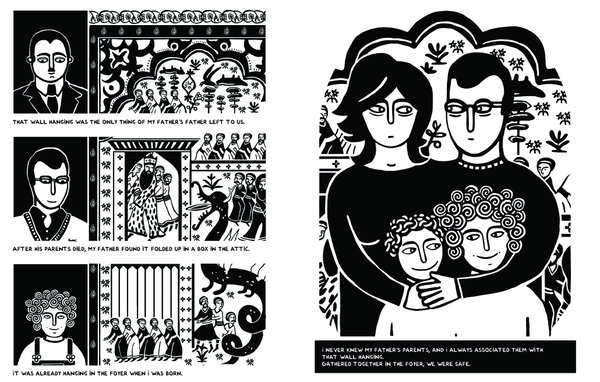
61VINU7rkIL._SY344_BO1,204,203,200_Author/illustrator Zeina Abirached offers insights into a later war, the Lebanese Civil War that raged from 1975 to 1990.  Her award-winning graphic memoir A Game for Swallows: To Die, To Live, To Return (2007; 2012) and its companion volume I Remember Beirut (2008; 2014) were originally written in French.  Both books draw upon her family’s experiences in a country (and its capital city, Beirut) divided by religious as well as political strife.  Born in 1981, talented Abirached presents a doubled vision of these events, depicting them mainly through her childhood perceptions but also including some information that is beyond a   young girl’s knowledge or interest.  Visually, both black-and-white books share the same bold style: heavy use of black backgrounds; stylized, geometric shapes and decorations (in accord with traditional Middle Eastern motifs); and repetition of many small panels to indicate the slow, often tense passage of time.

A Game of Swallows depicts the constant danger, sudden death, and lack of necessities such as clean water that impel people to seek refuge elsewhere.  The memoir begins with some tenants already having left young Zeina’s apartment building to go abroad and others having moved there as one step on their journeys elsewhere.  Old and new neighbors band together to support one another, with the foyer of Zeina’s apartment, structurally the safest place in the building, becoming their “community shelter.”  Aptly, an heirloom wall hanging depicting the flight of Moses and the Jews out of Egypt decorates this sheltering hallway. Despite the dangers confronting them, Zeina experiences only kindness and generosity from her sometimes quirky neighbors.  She and her family themselves move after a bomb destroys part of the barricaded apartment building.  Their becoming refugees ends the book.

14childrens-2-articleLarge

In the episodic I Remember Beirut, an older Zeina tellingly uses a two-page spread draw20901532n as a board game to depict the constant upheavals begun with this first move.  She and her family are merely playing pieces, shifted along the path’s squares by wartime chance, represented by the game’s dice.  Ironically, when this civil war finally ends, Zeina and her family are able to return to their “home neighborhood,” now safe in a way she has never known.  The feared “enemy territory,” once hosting deadly snipers and bombers, had begun just across the street!  Yet the grown-up Zeina still cannot take safety for granted—in some senses she remains a refugee.  The final pages include one set in Paris in 2008, as Zeina fearfully “remembers the bombing” when a thunderstorm awakens her.   Refugee wounds are not merely physical.
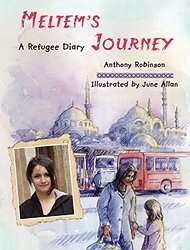
51mGaWGzfGL._UY250_Graphic works about current child refugees acknowledge psychological as well as physical wounds.  A series of picture books, each subtitled A Refugee Diary, uses real children’s words and some photos to tell their stories.  Author Anthony Robinson, editor Annemarie Young, and illustrator June Allan supplement and craft this information into narratives that spotlight the pain, uncertainty, and struggles of child refugees who have found shelter in Great Britain.  Gevelie’s Journey (2008) follows a young girl from the embattled Congo, while Mohammed’s Journey (2009) describes a boy’s dangerous escape from war-torn Iraq.  In Hamzat’s Journey (2009), we see how a young boy from Chechnya copes with losing a leg to a land mine as well as resettling in a new country.  Meltem’s Journey (2011) follows a Kurdish boy fleeing  from Eastern Turkey.  Some child refugees probably never will be able to return to their homelands; some wish they could, while others are uncertain of how they feel about a possible return.

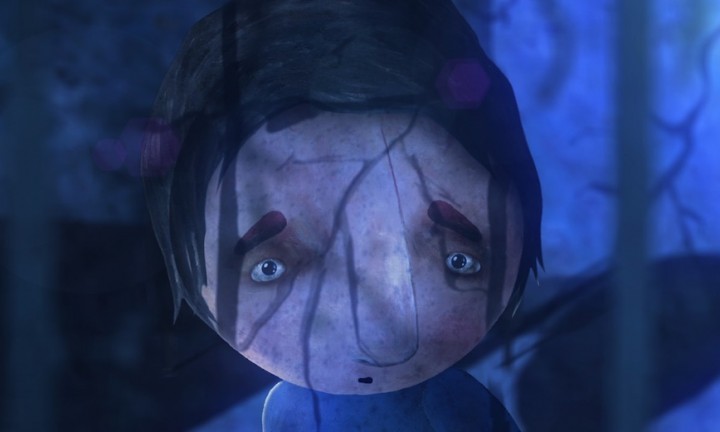
Seeking-Refuge-Mosaic-Films-LargeAnother kind of graphic work, a half hour animated film titled Seeking Refuge (2012), also spotlights young refugees to Great Britain.  Youngsters from five  different world regions provide the voice-over narration in each 6 minute segment.  They include a girl named Rachel whose family was several times denied refugee status by the British.  Through her eyes, we see the uniformed police who came to deport her family as looming giants, even as we hear her describe them as “monsters.”  Now at last safely resettled in Great Britain, Rachel never wants to leave!  I do not know if or how she and her family take part in Britain’s Halloween traditions, with their own emphasis on fantasy monsters.

Some USA communities have also begun to create and use graphic works to help refugees adapt to new lives in this country.   These pamphlets explain unfamiliar activities and events in ways the newcomers can understand.  In Australia, some graphic pamphlets seem designed to discourage displaced refugees from seeking asylum in that country.  These works emphasize the monstrous difficulties refugees will experience in their journeys and upon arrival.  In “The Unwanted,” a graphic article reprinted in his book collection titled Journalism (2012), award-winning reporter/illustrator Joe Sacco shows several views of the complex refugee situation in the island nation of Malta.  African refugees arrive there hoping to move on to Europe.
How will you and your community respond to the probable arrival of immigrants and refugees in your area?  Perhaps the works described in today’s post will help you and your neighbors understand a bit more about the past as you look towards the future.

Posted in graphic novels | Tagged , , , , , , , , , , , , , , , , , , , , , , , , , , , , , , , , , , , , , , , , , , , | Leave a comment

Sunny Side Ups and Downs

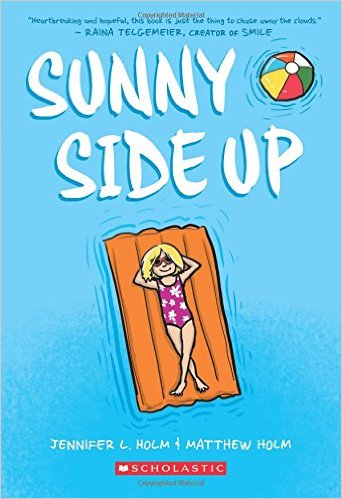
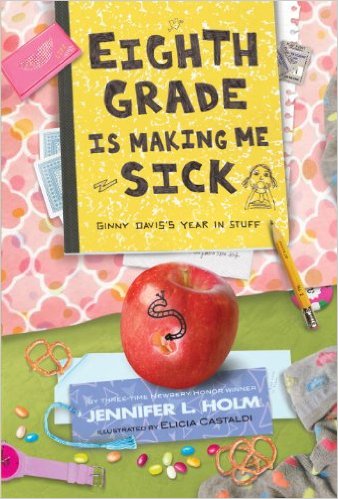
5130odeUl-L._SX340_BO1,204,203,200_Life’s ups and downs for ten-year olds are very different from those of senior citizens.  Yet there is also common ground that ultimately unites ten-year old Sunny Lewin and her Gramps in Sunny Side Up (2015).  This brand-new, semi-autobiographical memoir from author Jennifer L. Holm and her illustrator brother Matthew Holm (the gifted creators of the wildly popular, award-winning Babymouse series [2005 – 2015]) at times had me ruefully laughing out loud.  Many of the scenes set in Gramps’ “55 and Over” Florida retirement community are painfully familiar to me, living as I do in a suburban “seniors” cooperative building!  Just as the Babymouse books, marketed to 7 to 10 year olds, hold value for readers of all images (10)ages, Sunny Side Up will also have wide appeal.  Similarly, I think that anyone young at heart will appreciate Jennifer Holm’s two start-of-the-school-year books, Middle School is Worse than Meatloaf (2007; 2011) and Eighth Grade is Making Me Sick  (2012; paperback published just this month).  Even though these books about tween-to-teen Ginny Davis (“told through stuff” by illustrator Elicia Castaldi) are supposedly best for 8 to 14 year olds, they resonate much more widely. And isn’t that joyful news for those of us in our “sunset” years!  These three books are the focus of this month’s post.

What has led up to Sunny’s being sent to spend a summer month with Gramps?  Even though he is welcoming, it is obvious that the “Pine Palms Retirement Community” in August, 1976 is an incongruous place for kids.  Sunny veers between being bored and being bewildered by its rules and traditions, such as racing out for late afternoon “Early Bird” supper specials.   The Holms do a great job of revealing the mystery behind Sunny’s visit slowly, switching back and forth between that month and the preceding year in Sunny’s Pennsylvania home town.  Along the way, colorist Lark Pien’s hues capture both the bright colors of daytime Florida and the more varied, subdued tones of seasonal Pennsylvania. 

9780545741651-sunnysideup_zoom

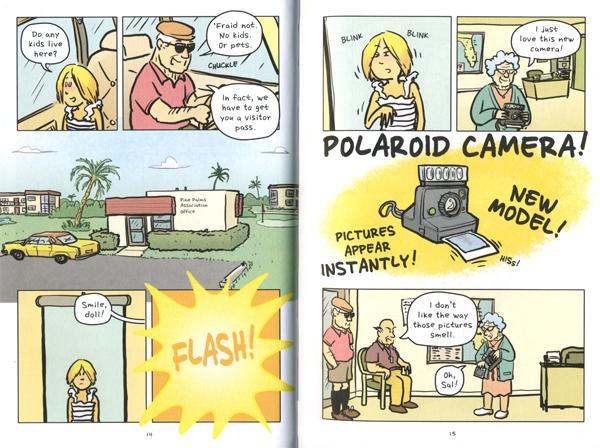
As in the Babymouse books, the Holms skillfully integrate words and images to tell their story.  At times, they achieve this with images that belie what is said—for instance, Sunny’s unhappy face when she replies that she can’t wait to see what Gramps has planned.  At other times, Matthew Holm’s drawings expand the impact of Jennifer Holm’s words.  The shadow of Sunny’s older brother literally looms over her in a classroom, as a new teacher learns Sunny is related to the trouble-making teen.  Readers come to see the impact of his drug abuse on the entire family—both through specific events and through the way these figure in Sunny’s imagination, after she reads about the volcanic destruction of ancient Pompeii.  Towards the end of her sheltering month with Gramps, Sunny herself finds the strength to “explode” into action.  The superhero comics she has been reading with the one other kid at Pine Palms, its Hispanic groundskeeper’s son Buzz, inspire her.  Sunny confronts Gramps after throwing away the cigarettes the wheezing, coughing man has continued to hide and smoke.  She will not let another beloved family member harm himself with substance abuse.

Sunny Side Up tackles a serious subject, but not in a heavy-handed or simplistic way.  Even as the Holms fill this book with 1970s details that will make older readers nostalgic (rotary phones! wire carousels stacked high with comic books!), they include humorous Florida situations as well as emotionally complex Pennsylvania scenes.  And, as in the Babymouse series, close-ups alternate with more distant views, and panel size and perspective vary, in ways that enhance the story’s pace and overall impact.  This impact is finally a hopeful, joyful one—Sunny leaves Florida with souvenir Mickey Mouse ears, photos of Pine Palms residents enjoying Disney World in ways they never expected, gift comics from Buzz and his family, and a smile on her face. A final note from Jennifer and Matthew Holm explains how their own family experience led them to write this book and offers suggestions for any young readers with a relative who is abusing drugs.

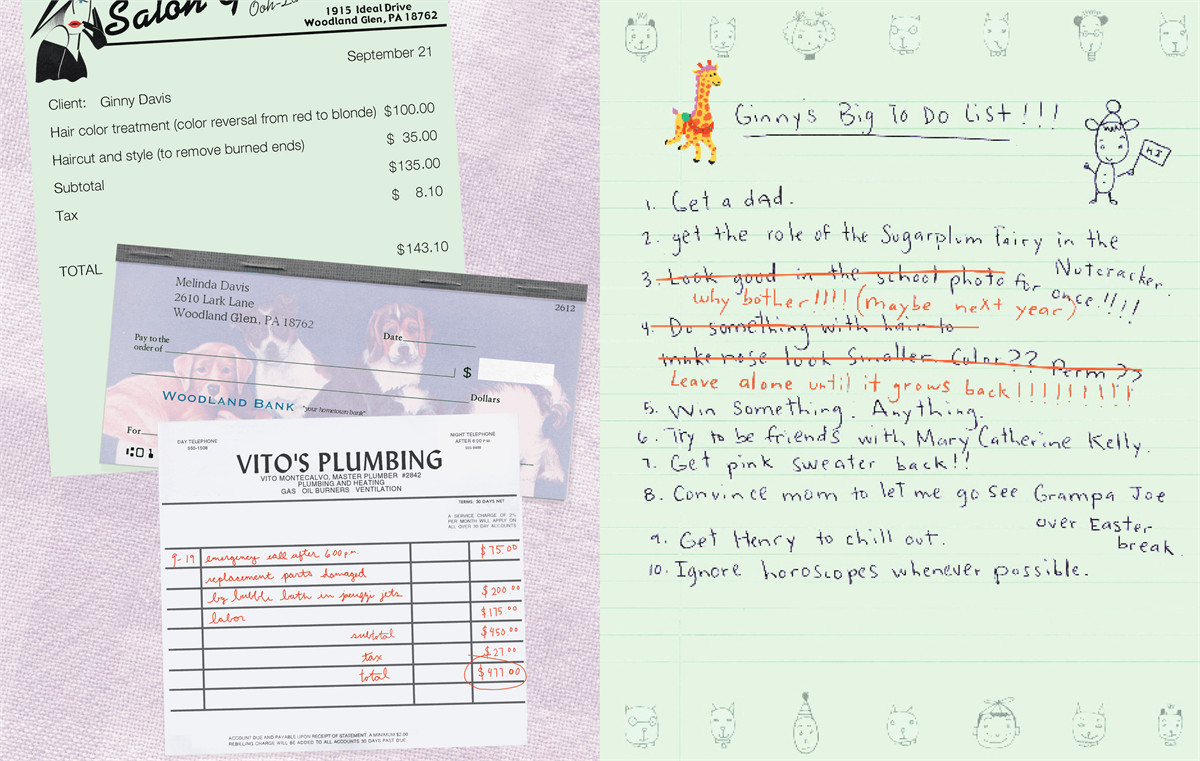
51DMwJa-zpL._SX336_BO1,204,203,200_Serious topics treated with deft humor and visual punch are also the hallmark of Jennifer Holm’s back-to-school books, Middle School is Worse than Meatloaf and Eighth Grade is Making Me Sick.  Here as well readers are called upon to “detect”  conclusions about character Ginny Davis’ experiences—first in 7th grade and later in 8th—by carefully observing the “stuff” in her life. There are no conventional, all-text pages.  Instead, illustrator Elicia Castaldi smartly digitalizes and arranges on each page such objects as “to do” lists, school schedules and essays, bank account statements, post-it notes left on refrigerators, computerized Instant Messages, holiday cards, and newspaper announcements.  These collages represent the challenges and changes Ginny faces between the ages of twelve and thirteen, some of which are common among tweens (what to wear, how to be popular and attractive, how to earn and manage money) and some that are more unusual.  During these years, Ginny’s widowed mother remarries and has a baby.  Her new stepfather loses his job.  We are left to “read between the lines” of the wedding announcement, a huge hospital bill for a premature delivery, bills for car repairs, and several pages later on a realtor’s listing for the financially-troubled family’s house.    

middle-school-is-worse-than-meatloaf-9780689852817.in02

Another storyline in these books anticipates elements of Sunny Side Up, as Ginny’s prank-playing older brother Henry gets into trouble with the law.  Illustrator Matthew Holm makes “guest appearances” throughout both books, drawing comic strips supposedly written by Henry.  These strips show both Henry’s recklessness and the underlying love of family and remorse that, along with some tough love from his mother and stepfather, ultimately help this roguish character stay on the right side of the law.  It is fascinating to see how much  people’s personalities and relationships are conveyed through briefly worded notes and the juxtaposition of related items, such as airline tickets, movie rental receipts, and celebrity convention tickets.   We get a real sense not just of Ginny and her friends (including the pesky classmate who turns into her first date) but of the adults in her life: parents, grandfather, teachers, and even doctors.   And—while Ginny does experience disconcerting change along with earlier, tragic loss—as in Sunny Side Up,  these back-to-school books end on a realistically positive note.  Ginny Davis is so ready for 9th grade and its new and ongoing adventures!

110-111

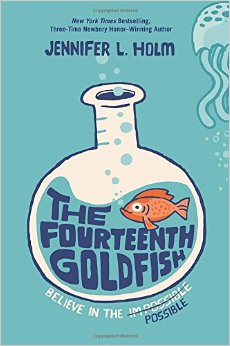
I do not know if Jennifer Holms and Elicia Castaldi will collaborate on another award-winning book about this character, but I plan now to catch up with some of Jennifer Holm’s other (non-graphic) award-winners for tween literature.  Library copies of Turtle in Paradise (2010), one of her Newberry Honor Books, and The Fourteenth Goldfish (2014) are already on my book kpynftio3ehectvuvuk0shelves. These books both deal with family relationships—with Goldfish imaginatively highlighting a grandfather and granddaughter.   Elicia Castaldi’s collages make me eager to revisit other collage-rich books, such as author/illustrator Faith Ringgold’s multiple award-winning, imaginative Tar Beach (1991).  Perhaps you have your own collage-illustrated favorites . . . ? 

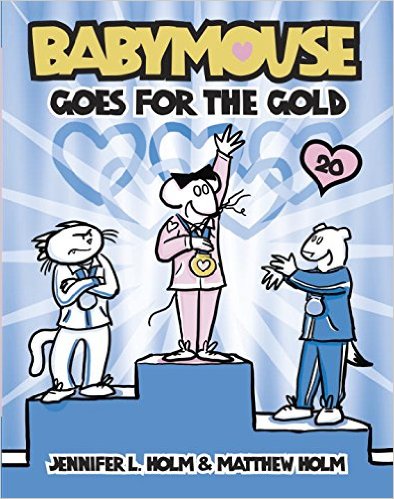
51ZiO44bD-L._SX392_BO1,204,203,200_I can reassure readers young and old who have consumed all of the current Babymouse books (numbers 1 through 19) that in April, 2016 we will see the publication of volume 20—Baby Mouse Goes for the Gold.  Until then, young readers may want to try out some of the activities for kid fans at the publisher’s website, which also hosts activities for Jennifer and Matthew Holm’s newer graphic series.  Its hero is a daydreaming amoeba named Squish!   Some science facts relevant to the school curriculum are tucked in there, within and between Squish’s oozy, submicroscopic adventures.  Ready or not, it’s September, the exciting start of school days (and school daze) here in North America.  Happy reading, everyone! Don’t let the age designations on books limit your reading pleasure . . . or the reading joys of the young people in your life.    

Posted in graphic novels, memoir, picture books | Tagged , , , , , , , , , , , , , , , , , , , , , , , , , , , , , , , , , , , | Leave a comment

O Canada! Super People and Super Heroes

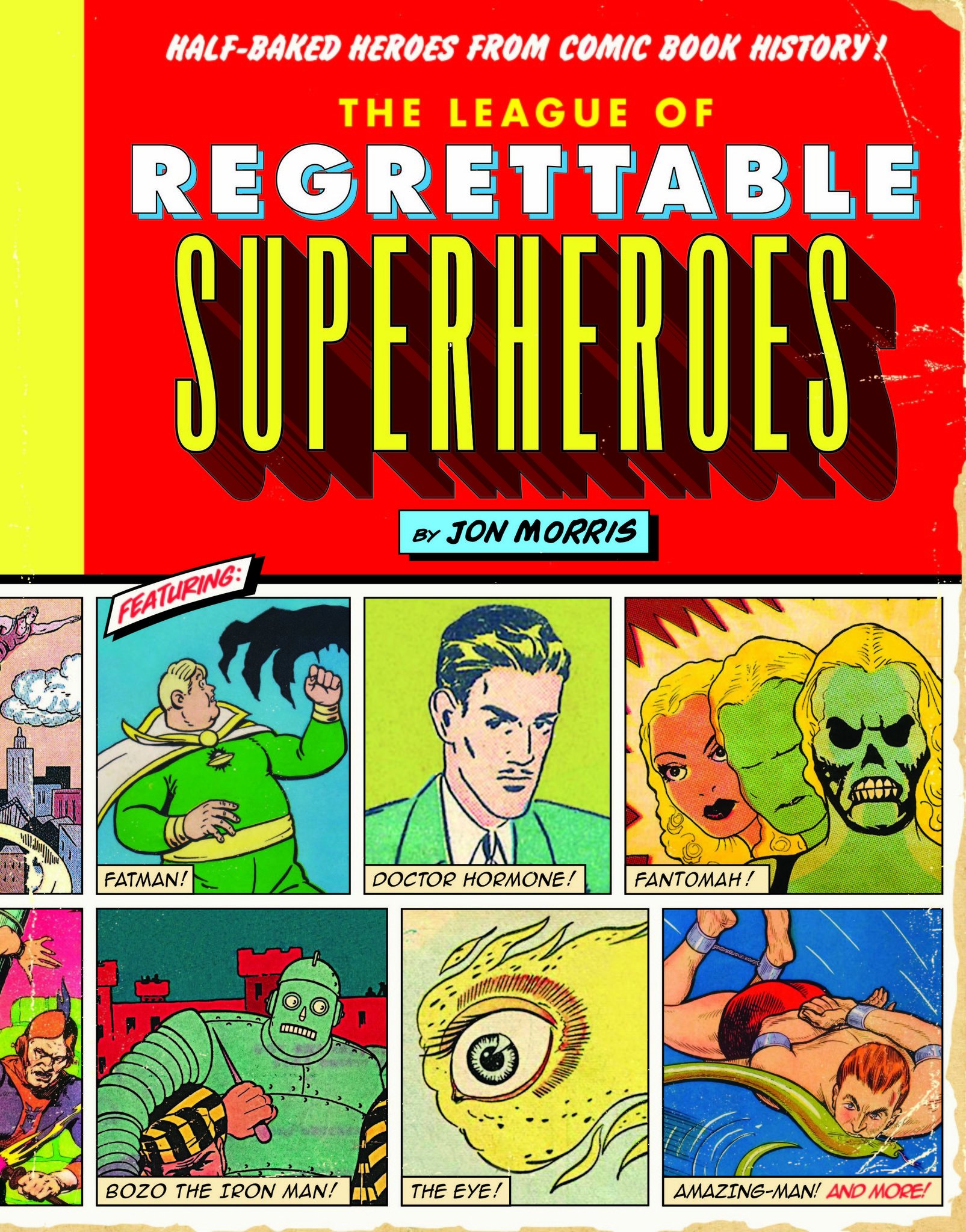
logo-scbwicaneastLast month in Montreal, I had the pleasure of dining with three talented illustrator/authors, all members of the SCWBI’s (Society of Children’s Book Writers and Illustrators’) Eastern Canada Chapter: Julie Prescesky, Julien Chung, and  Emilie Pepin. Chatting with these super people, discussing their craft and  book doings in bilingual Quebec, led me to think about Canada and superheroes.  A visit a few days later to Librairie Drawn & Quarterly, the bookstore operated by the innovative, influential Canadian Drawn & Quarterly Press, also brought superheroes to mind. regrettable-final-300dpijpg-7d34a002bad62eb8 That is where I first paged through The League of Regrettable Superheroes: Half-Baked Heroes from Comic Book History (2015).  Its compiler, Jon Morris, has created a wonderfully entertaining and informative book—springboarding in part from his longtime website.  This volume is filled with wry, detailed comments and full-color, original illustrations of mainly U.S. superheroes who never achieved popularity or had limited, mostly-forgotten fame.  Readers young and old will laugh out loud about the abilities and adventures of heroes such as Captain Tootsie, Kangaroo Man, Fat Man, and Thunderbunny.  Yet not every “caped crusader” in this volume is just a figure of fun.

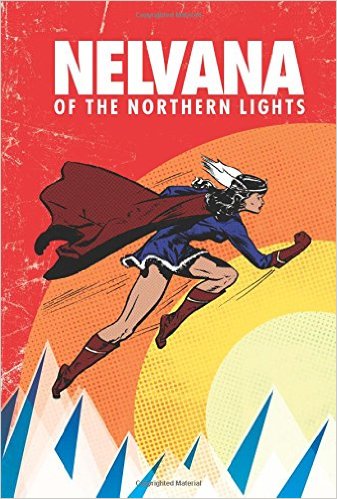
As Morris himself notes, some of these characters–such as Canada’s heroine “Nelvana of the Northern Lights”—have great historic and cultural importance.  Rooted loosely in Inuit legend and life, demi-goddess Nelvana appeared in print to fight World War II enemies even before the USA’s battling “Wonder Woman” debuted.  Nelvana also preceded Canada’s other World War II super fighters, Sergeant Jack and Johnny Canuck.  (Since then, of course, Canada’s superhero ranks have swelled to include the 1980s and 1990s Alpha Flight roster and—most famously—the X-Men’s Wolverine.) 

51IFUHwHebL._SX335_BO1,204,203,200_Nelvana’s black-and white adventures, which appeared monthly between 1941 and 1947, were recently compiled in one volume by editors Hope Nicholson and Rachel Richey. Their comments in Nelvana of the Northern Lights (2014) spotlight how some of author/illustrator Adrian Dingle’s stories and language unfortunately use stereotypes prevalent in the 1940s.  The Inuit (called “Eskimos” by Dingle) are often depicted as childlike and susceptible to drink, while the Japanese (and even other non-combatant Asians) are labelled the  “yellow peril” and sometimes drawn as caricatures.  Still, readers warned about Dingle’s cultural “tone-deafness” will be fascinated by his 1940s take on technological wonders and the visual sophistication of his illustrations.  Varied perspectives and frequent frame-breaks uniting images occur often in his boldly-drawn pages.  These techniques create narrative momentum and interest even as 21st century readers may smile at now-outdated scientific threats and rescues.  Nelvana’s superpowers of telepathy, invisibility, flying at light speed, and metal melting are used to overcome such dangerous weapons as . . . radio waves.  

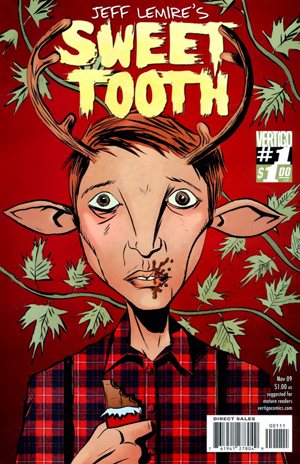
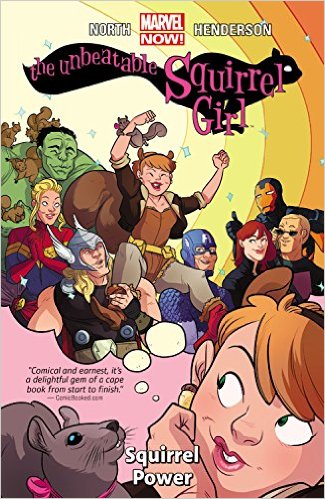
Jon Morris also notes that some “regrettable” superheroes failed just because they appeared at times and in venues where they could not find appreciative audiences.  He counts the 1990s “Squirrel Girl”–she of the bushy tail, chipper disposition, and relative speedy strength of squirrels—among such misplaced characters, some now being rebooted for new readers.  I shall return to 2015’s  “Squirrel Girl,” now being written by a Canadian, at the end of this post.  But first I want to highlight the more extensive superhero creations of award-winning Canadian author/illustrator Jeff Lemire.  Tween and teen readers may already have seen some of them, and 2016 will be bringing more. (Older teens may also have read or want to read Lemire’s separate, darker six volume series about mutants who are not superheroes, Sweet Tooth  [2009 – 2013].)  

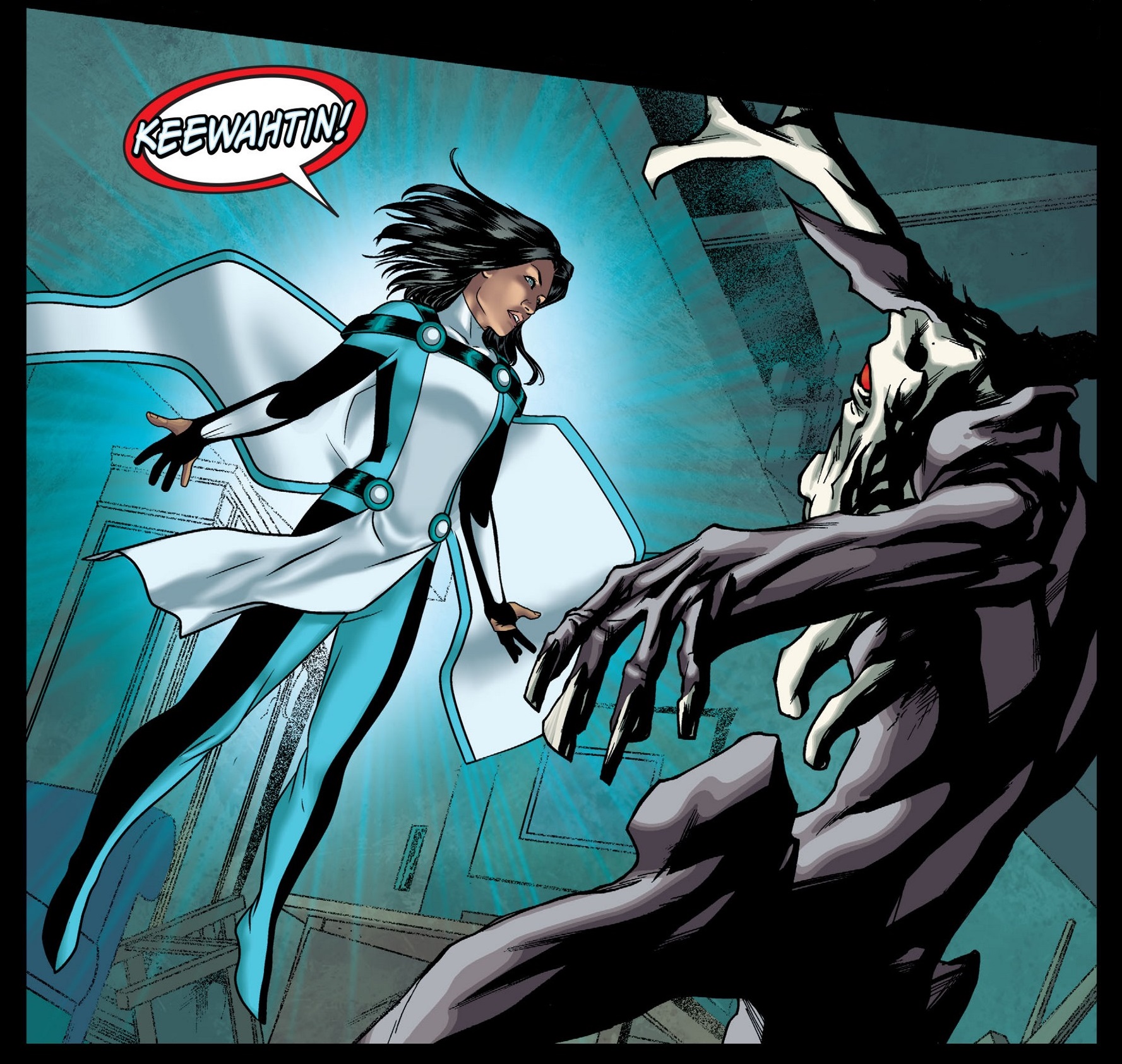
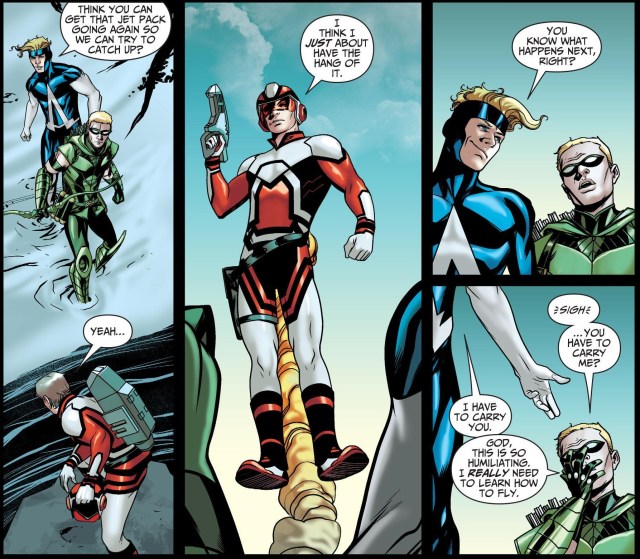
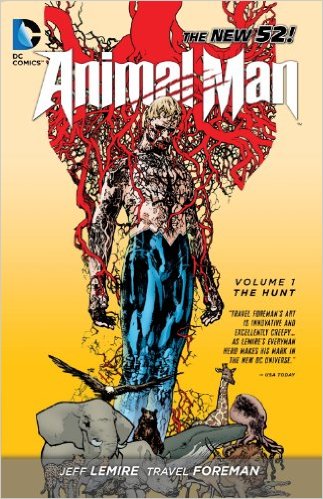
61dw9FhpepL._SX323_BO1,204,203,200_In Justice League United, Volume 1: Justice League Canada (2015) (a compilation of Justice League United comics #0 – 5 [2014]), writer Lemire has collaborated with artist Mike McKone.  They reboot popular superheroes from the DC universe and set their adventures in Ontario, Canada as well as outer space!   Returning heroes include Green Arrow, the Martian Manhunter, Star Girl, Supergirl, and Animal Man.  Even more interesting, Ontario-native Lemire has created a young, brand-new Canadian superhero to join this newly-reforming league.  Sixteen year-old Miyahbin Marten is a Moose Cree, one of Canada’s First Nation peoples. She lives in far northern Monsonee/Moose Factory, Ontario, and inherits her cyclical super powers from Earth and her tribal ancestors.  Miyahbin, depicted interacting with her respected grandmother as well as friends, accesses her powers by proclaiming the Cree word her grandmother has taught her: “Keewahtin,” which means “northern wind.” 

4047203-justice+league+united+(2014-)+000-013Lemire travelled to Monsonee over several months, working with young people there to get his depiction of contemporary Cree culture and lives “right.”  His afterward in Justice League United describes his experiences and includes drawings by the Cree youngsters who inspired him.   This inspiration extended to artist McKone, who based the costume for “Equinox”—the superhero name Miyahbin assumes—on Cree ceremonial garb.  In a Native Peoples magazine article, Moose Factory residents describe how exciting it is to see their community, including its youth center and abandoned missile base, depicted in a DC international publication.  This specificity and cultural accuracy make Equinox a far cry and welcome antidote to the stereotypes that flaw Dingle’s groundbreaking Nelvana.  I look forward to future issues (and compilations) of Justice League United, where Lemire says an older Equinox will take on a leadership role.

justiceleagueunited0_c2-4Equinox is not the only reason, though, for this volume’s success.  Illustrator McKone’s smartly-angled panels of different sizes, judiciously using tightly-focused close-ups for dramatic impact, impel each issue’s excitingly rapid pace.  Superimposed small panels sometimes spotlight individual characters in crisis.  Occasional full-page, wordless or nearly wordless-pages further highlight moments of high conflict, inviting readers to feast our eyes.  Working with a roster of skilled inkers and colorists, McKone also effectively varies the color and font of exclamations during the League’s adventures, and also cues readers to changes in scene by consistently linking color palette to place.  For instance, an evil alien scientist’s lair is consistently colored a sickly green, while whites, blues, and cool greys feature in the Canadian near-arctic. 

cY2whzkAlong with creating believable dialogue for young Mihaybin, her grandmother, and the youthful Star Girl, Lemire adds interest to the League’s adventures by creating an ongoing, half-joking rivalry between Green Arrow and Animal Man. Animal Man mocks the seemingly endless variety of arrows the archer carries, while Green Arrow veers between fake and possibly some real disdain for Animal Man’s superpower—his ability to take on characteristics of nearby creatures.  This involves a nice bit of self-mockery on Jeff Lemire’s part, as before writing this volume, the prolific Lemire authored an acclaimed “reboot” of the 1980s superhero Animal Man.  He collaborated with artists Travel Foreman and Dan Green on 29 comic book issues now collected in five Animal Man compilations (2012 – 2014). 

51iHx1OJQCL._SX321_BO1,204,203,200_That highly-praised “reboot” series poses something of a problem for me as both reader and reviewer.   I think Lemire does an incredible job depicting the family relationships of Buddy Baker (the stunt man who becomes Animal Man), including developing the characters of his 9 year old son and 5 year old daughter, yet some of the art work unfortunately (from my point of view) lives up to its back cover blurbs.  Many pages are “horror-tinged” and “visually pushing the envelope at every turn.”   Rather than feasting my eyes on those  pages, I tend to avert my eyes!  So, I would caution even adult readers who might share my sensibilities about Animal Man’s intermittent but frequent gruesome images.  Would teens who enjoy horror movies—and are permitted to view movies rated “R” for violence—enjoy the Animal Man series?  Probably. . . but I would not give it a blanket recommendation for all Sweet-Tooth-01-cov1teens, even older ones.  On the other hand, Lemire’s Sweet Tooth series, while it depicts a bleak and violent dystopic future, does get my recommendation for older teens.  Its six volumes, illustrated as well as written by Lemire, are visually as well as narratively compelling, making noteworthy use of wordless pages along with sparse, naturally-inflected dialogue.  This series detailing the experiences of a human boy with antlers is a fine follow-up for readers of Lord of the Flies, as well as such post-apocalyptic works as Cormac McCarthy’s The Road, Stephen King’s The Stand, or David Brin’s The Postman

Sweet Tooth is outside any of the shared DC or other comic book universes—a creator-owned work by Jeff Lemire.   He has written and illustrated other wholly original works, including a trilogy about small-town, hockey-obsessed life in Ontario, Essex County (2008 – 2011).  Its first volume won a 2008  Alex award, given by the ALA (American Library Association) to works written for adults also holding great appeal for teens.  Lemire’s original, time-spanning, futuristic love story Trillium (compiled in one volume,2014) will also appeal to teens, some of whom may also enjoy the mysteries in the psychologically DescenderCoverFinalsuspenseful, multilayered Underwater Welder (2012), even though that work about fathers and sons will resonate most, I think, with parents and parents-to-be.  Next up,  I am looking forward to the first compilation of Lemire’s original series about a boy android, illustrated by Dustin Nguyen: Descender, Volume One: Tin Stars (2015), scheduled for publication next month.  Collecting issues 1 – 5 of this Vertigo publication, Descender has already been optioned for future movie production!   

616wgv03CsL._SX323_BO1,204,203,200_September, 2015 will also see the first compilation of the rebooted superhero Squirrel Girl, written by award-winning Canadian Ryan North and illustrated by Erica Henderson.  The Unbeatable Squirrel Girl, Volume One: Squirrel Power (2015), with its just off-to-college heroine, is already popular and a source of some controversy, with many readers of its individual issues praising their self-reliant, upbeat heroine while others find her flat and unbelievable.  I intend to discover my own truth there . . . and I would like to hear your reactions, too.  Also on my current browsing list is a library copy of Drawn and Quarterly Press’ brand-new, huge anniversary anthology: Drawn 51GkD8BUvEL._SX374_BO1,204,203,200_and Quarterly: Twenty-Five Years of Contemporary Cartooning, Comics, and Graphic Novels (2015).  It contains works by many significant contributors to literature gone graphic, including pieces by some Quebecois author/illustrators, translated from their original French, recommended last month by my Montreal colleagues at dinner.   O Canada! 


Posted in comics, graphic novels | Tagged , , , , , , , , , , , , , , , , , , , , , , , , , , , , , , , , , , , , , , , , , , , , , , | Leave a comment

Graduation: Visiting the SuperMutant Magic Academy

download (7)Check your high school diploma!  See if the words “SuperMutant Magic Academy” are lurking (perhaps written in invisible ink) on that certificate of achievement.  The feelings and “A-hah!” moments evoked by Jillian Tamaki’s recent publication are heartbreakingly familiar as well as funny.  This talented  Canadian author/illustrator’s ability to capture teenage feelings and experiences typical in 21st century Western society is even more remarkable because SuperMutant Magic Academy (2015) is set in a reality askew from our everyday life.  Like the wizards of J.K. Rowling’s Harry Potter books, unknown by most “Muggles,” Tamaki’s supermutant teens have amazing abilities that are  . . . well, just fantasies to ordinary young adults or oldsters.  And yet, as Tamaki sharply conveys, these abilities by themselves do not remove the doubts and aches of adolescence or solve the additional layer of problems imposed by school life.

smmapg123In fact, SuperMutant Magic Academy, which began as a web comic in 2010 and ran online until 2014, was created in part as a reaction to the Hogwarts phenomenon.  In an interview, Tamaki notes that she began this comic soon after Rowling published her final Harry Potter volume.  The author/illustrator wanted to explore the “humor in the tension between being a superhero and being a self-absorbed teen . . . .”  (Several Academy teachers even have names that recall Hogwarts faculty, such as Professor Snortwaffle instead of Snape for potions, while the student known as “Everlasting Boy” echoes Harry Potter’s fame as “the Boy Who Lived.”)

Tamaki also used this series as a way to hone her own storytelling skills.  Earlier, Jillian Tamaki had illustrated two award-winning YA graphic novels written by her cousin, Mariko Tamaki: Skim (2010) and This One Summer (2014, reviewed here in August, 2014).  This One Summer is a great coming-of-age novel, accessible to tweens as well as teens on up.  However, tweens still enchanted by Hogwarts adventures and similar works are less likely to enjoy their ironic debunking (or the many other ironies) in SuperMutant Magic Academy.  This book will be best appreciated by teens already in the full swing of high school life—or by those of us who can look back on the routines, expectations, and experiences typical in public schools as well as exclusive boarding schools such as the Magic Academy or Hogwarts.

tumblr_m6n74z7UpX1qf56dmo1_1280Its web comic origin—with episodes usually limited to lengths of  one to six frames—means that most of SuperMutant Magic Academy is told as a series of mini-stories, linked by setting and characters rather than an overarching storyline. Yet the focus on a limited number of characters, along with the restrained, telling use of color in its black-and-white drawings, reduces the “choppiness” of the narrative.  (One colorful instance is a teenager’s failing attempt to comment sarcastically about how U.S. 4th of July celebrations have wandered across Canada’s border.)   By the time we reach the new material Tamaki created to conclude the book—a forty-page long account of how these characters weather prom and graduation, we feel well-acquainted with them.  The one page epilogue—summing up each central character’s life after high school under thumbnail-sized, year book like “headshots”—is a welcome, satisfying riff on school traditions.

tumblr_n83gz4TBSD1qf56dmo1_1280As Tamaki’s title suggests, these characters are not merely human—or even human at all.  They include duck-headed Trixie as well as laser-eyed Trevor; attractive, popular Wendy, whose fox-ears suggest her shape-shifting ability but not her fox’s blood-thirsty hunger; and Everlasting Boy, whose ability to live forever would seem to be a blessing.  Yet the numerous episodes where this depressed character attempts suicide only to return frustratedly to life show that appearances can deceive.  Similarly, popular, handsome Cheddar, who appears to be a confident but shallow “jock” is shown in private to be worried and filled with self-doubt.  The episode in which a teen returns to a dorm room, hanging up a “skin suit” to then fall blank-faced into bed captures this contrast between public and private selves perfectly.   Other seemingly-human characters include  Frances, an artist and intellectual-manque whose performance pieces often  leave her blood-splattered, and non-conformist, heavy-smoker Marsha, whose crush on her best friend Wendy runs throughout the book and also features in the graduation-arc conclusion.

smmapg223Like many almost-graduates, the seniors of Supermutant Magic Academy are filled with more questions than answers about the future. The wordless nighttime episode in which a minor character is playing hopscotch, only to discover before the last leap that her playground is being flooded, captures this uncertainty.  Tamaki effectively draws this episode from different angles, using close-ups as well as mid and long-distance shots, which let us experience this ironic surprise along with the character.  Like the tide, life for these teens is surging ahead and washing away familiar routines.  Similarly, given what we have seen of dead-pan, intense Marsha, her surprised remarks during a school assembly—“WHAT? We GRADUATE? . . . . I guess I just figured we’d be stuck in here forever . . . .” –may be viewed as emotional truth as well as ironic commentary on school life. 

Yet friendship, however bittersweet, survives and triumphs.  Wendy does not recognize or later return Marsha’s romantic feelings, a situation Marsha ruefully accepts.  Still, after Marsha’s phantasmagoric prom night adventure involving Cheddar and a deadly prophecy, and Wendy’s simultaneously dancing to strobe-lighted music and partaking in some highly-illegal underage drinking, the pair fall asleep alongside each other.  Just before the snores begin, each tired or tipsy girl manages a sincere, sleepy “I love you” for the other.  As Jillian Tamaki has shown us throughout Supermutant Magic Academy, even cool (mutant) kids have hearts.  And—if enough care is taken and respect given—those hearts need not be broken.  Perhaps the book’s back cover text best sums up this insight and the feeling the entire book leaves behind:  “The kids of the SuperMutant Magic Academy want to be your friend.”


Posted in comics, graphic novels | Tagged , , , , , , , , , , , , , , , , , | Leave a comment

Color Me Puzzled . . . But Pleased

images (9)I had more questions than answers at last Sunday’s Minnesota Crossword Puzzle Tournament, held in St. Paul’s grand Landmark Center.  Yet I had enormous fun participating in this annual event, organized four times now by the Friends of the St. Paul Public Library.  Last year, our first in attendance, my husband and I played unofficially as “observers.”  This year, we plunked down more dollars to compete officially as “amateurs.”  Our scores showed that we had made a wise choice in not deeming ourselves “experts”—though my own dismal showing is due in part to not turning in one puzzle (out of three) for the final totals.  I now know how important it is to turn in even incomplete puzzles.  I also have gleaned a few other kernels of wisdom.  

One: Practice helps.  Fifteen years ago, when Cricket magazine published my history of crosswords piece “No Cross Words Allowed,” I was engaged in solving puzzles weekly.  That activity tapered off, especially after the SCBWI Magazine Merit Award this article won brought book contracts for other topics my way.  This last year, while my husband has been relaxing with crossword puzzle compilations, I have been de-stressing with intricately-drawn coloring books!  Being able to visualize the differences between teal and aquamarine, peach and salmon-colored pencils did not speed my No. 2 black-leaded pen or quicken my wits on Sunday. 

$_35 (1)Two:  Goals and pleasures change.  Years ago, I would have wanted to win or at least place in any competition.  Nowadays, I am much less competitive.  Being surrounded by other word-lovers, enjoying the challenge, and then discussing it with my husband as we walked out into a sun-drenched spring afternoon were enormously satisfying.  And, while years ago I would have scoffed at time “wasted” on coloring books, today I derive meditative pleasure in poring over different shades and combinations, pleased too that in my mid-sixties I have the dexterity and vision to tackle finely-detailed work.   I still know it is important to think outside the box, but it is also great to be able sometimes to color within the lines!

Three: “Time’s up!”   That announcement ended each round of Sunday’s competition after fifteen minutes, whether or not one had completed the puzzle.  A good metaphor and reminder of mortality, given where my husband and I now “place” on the typical North American life span.  We may not have the time to complete, see, or do all that we want to before our time runs out.  That is a practical thought rather than a morbid one. . .  a call to make wise choices, to act, say, and do what we deem important without hesitation or much delay.  Also, as the outcome of Sunday’s scoring shows, even incomplete efforts “count” and should not be disdained or overlooked.  That realization is both comforting and dismaying, as it removes one excuse for not beginning or continuing long-term projects.

cricket-funstuff-puzzles-leftSo– in acknowledgement of the word play we enjoyed at this tournament (and the puzzle setters who donated their efforts to make it possible) and before I even glance towards my stacks of  books waiting to be read or colored—I reproduce below “No Cross Words Allowed.”   It first appeared in the May, 2000 issue of Cricket, which still uses a cartooned “Ugly Bird”  to introduce each month’s featured crossword puzzle.  

*************************************************************

WARNING: crossword puzzles may be dangerous to your health!

Some doctors actually gave this strange medical advice in the 1920s, when crosswords became a wildly popular fad throughout the United States.  Psychiatrists feared that the frustration of trying to solve these puzzles might cause mental problems and insomnia.  One Broadway musical in 1925 joked about this concern with a scene set in a “Crossword Puzzle Sanitorium”–a place just for people driven insane by crosswords.  Optometrists also cautioned that staring at the checkered pattern and constantly looking from clue to puzzle could damage eyesight.  These doctors may have been alarmed at the way crosswords were invading so many parts of everyday life.  

wynneThe first “Word-cross” puzzle appeared in the 21 December 1913 edition of the New York World daily newspaper.  When English-born Arthur Wynne created this holiday entertainment for the Sunday “Fun” section, he had little idea of the craze he was starting.  He saw his puzzle as an extension of the simple word square games played by children in the nineteenth century.  Word square puzzles can be read from top to bottom and vice versa or from left to right and right to left.  The “Word-cross” was also a variation on a puzzle made popular by Britain’s Queen Victoria–the acrostic.  An acrostic is a poem in which the beginning or ending letters of each line form a word, name, or  phrase when read from top to bottom.  Word squares and acrostics have a long history: archeologists uncovered an ancient word square in Cirencester, England, and acrostic hymns and poems have been a favorite pastime for hundreds of years.  It was not until the 1920s, though, that a passion for word puzzles swept through two countries.

a86d5b5bb52ef12439780002cc31334cDaily puzzles in newspapers across the United States created crossword addicts.  To satisfy word-hungry travelers, railroad trains printed crosswords on the back of dining car menus.  Some railroad companies even provided dictionaries.  One New York dress manufacturer produced a whole line of dresses embroidered with four-inch-square puzzles.  Each dress came with a pamphlet of puzzles that, when completed correctly and returned to the store, entitled the buyer to a discount on future purchases.  Jewelry lovers could buy silver pins and gold bracelets with a crossword motif.  Music lovers hummed along to such puzzle songs as “Crossword Mama, You Puzzle Me, But Papa’s Gonna Figure You Out.”

One minister eager to increase church attendance tapped into the crossword craze by displaying a large crossword puzzle at the front of his pulpit each Sunday.  The solution to the puzzle always related to that week’s sermon.  Addiction to crosswords even caused some people to break the law.  In New York City three men completing a puzzle refused to leave a restaurant at its 2:00 A.M. closing time.  The instigator was arrested and brought to court the next day.  When the judge sentenced this offender to ten days in a “four-letter word meaning ‘place of detention,'” the crossword fanatic told the stunned judge, “That’s great!  Now I’ll have a chance to work on puzzles in peace and quiet.”

Schuster-and-SimonIn 1924 the new publishing firm of Simon and Schuster gambled on the crossword obsession and published the first book consisting entirely of crossword puzzles.  Not wanting to be embarassed if their idea failed, Simon and Schuster used an alias–the Plaza Publishing Company–on the book’s copyright page.  As an advertising gimmick they even convinced the Venus Pencil Company to supply a free pencil with each copy.  Simon and Schuster need not have worried about their reputation or sales.  The Cross Word Puzzle Book began a series of record-breaking bestsellers, with more than 400,000 copies sold in the United States just in 1924 and 1925.  These years also saw the start of organized crossword competitions, with college fans at Harvard challenging puzzlers at Yale, and the New York City police squaring off against the fire department.

04f41a16973fe65b7b9ad39a7693bb96The editor of The [London] Times wrote pityingly in December 1924 that “AN ENSLAVED AMERICA” was losing millions of working hours daily to the crossword craze.  Little did he know that in a few months Britain would begin its own love affair with crosswords. 

In 1925 both Queen Mary and British Prime Minister Stanley Baldwin announced that they were loyal fans of the checkered word puzzles that had begun to appear in their country’s newspapers.  This admission led more papers to include crosswords as a regular feature, and by the end of the year Britain had its own mail-in crossword competitions that thousands of readers were entering.  Contestants competed for cash prizes not only by trying to complete puzzles correctly but by reaching their solutions in the least amount of time.  This was quite a challenge since British crosswords were usually much trickier than American ones.

While American crosswords used straightforward definitions as clues, British clues were often written as riddles, puns, or allusions.  Sometimes these “cryptic” clues even hid their meanings in plain sight.  For instance, the four-letter answer to “An important city in Czechoslovakia” could not be found on any map of that country.  Readers had to figure out this solution by examining the word Czechoslovakia itself, where–if they knew their geography–they would discover Oslo, the capitol of Norway!

93856The most successful creators of these complicated puzzles were Edward Powys Mathers, who wrote under the pen name Torquemada, and Derrick Somerset Macnutt, who created puzzles under the name Ximenes.  Both pen names playfully suggested the mental “torture” they inflicted on their devoted public; the original Torquemada and Ximenes were officials in charge of torture during the Spanish Inquisition.  Crossword fans made wild guesses about the true identities of Torquemada and Ximenes, but not knowing their real names did not prevent puzzle addicts around the word from corresponding with their idols.  At his publisher’s address, E.P. Mathers even received pieces of wedding cake mailed by couples whose shared passion for Torquemada’s crosswords led to marriage.  Derrick Macnutt was persuaded to reveal himself when fans planned celebrations in honor of Ximenes’ 100th, 250th, and 500th puzzles.  The Ximeneans (as these puzzleholics termed themselves) all came wearing a Ximenes tie–black with small white Xs!

PB-Ser 9British puzzlemakers continued to use pseudonyms, but American crossword fans knew their leader.  Margaret Petherbridge Farrar, coeditor of the Simon and Schuster crossword puzzle books and later editor of the New York Times crossword column, had firm ideas about crosswords.  Her rules for the number of letters and black squares in puzzles and their symmetrical patterns became the standard throughout the United States.  Mrs. Farrar published puzzles submitted by prison inmates as well as by schoolboys, actresses, and soldiers, but she always explained that crosswords for her column had to avoid unpleasant things such as “death, disease, war and taxes–the . . . solver gets enough of that in the rest of the paper.”

Some doctors may have voiced improbable concerns at the beginning of the crossword craze, but in the 1930s and ’40s crosswords became dangerous for political, rather than medical, reasons.  Anti-Nazi Germans in the 1930s used these puzzles to communicate with each other secretly.  Their solutions would spell out meeting places, times, and other plans.  During World War II, American censors would not permit crosswords to be sent to soldiers overseas in case their solutions contained classified military information.  Overworked censors did not have the time to solve these puzzles themselves!  British officials similarly prohibited crosswords from being mailed to their dominion countries.  And, after the liberation of Paris by Allied troops, crosswords were banned from French newspapers to prevent Nazi sympathizers from using these puzzles to reorganize.

Today few people have cross words for crosswords.  Everyone–even an Ugly Bird–can enjoy their challenge in a magazine or newspaper.  In addition, a variety of contests, such as the annual American Crossword Puzzle Tournament, offer fans the chance to try out their puzzle-solving skills while competing for prizes.  So sharpen those pencils and dive into a crossword (or a crossbird) puzzle!

CWPStamp

LoveYouDad

Posted in articles | Leave a comment